The Silicon Valley chronicles

We should have seen this coming. At Platformer, Casey Newton reports that Meta has discussed pulling funding for the Oversight Board after 2028 after already reducing it “significantly” this year. Who needs fripperies like independent governance after reporting billions of losses in its Reality Labs unit, the bit responsible for the seemingly now-abandoned metaverse, the smartglasses, and, of course, AI? Per Newton, there are ongoing discussions about continuing the Oversight Board somehow, perhaps by opening it up to adjudicate for other platforms.

The reality is the Oversight Board’s moment has probably passed. In 2018, creating it was an effective public relations response to a series of scandalous revelations, beginning in 2017 with Carole Cadwalladr‘s work exposing Cambridge Analytica‘s use of Facebook to collect personal data to target political advertising. Its biggest moment was probably in January 2021, when the Oversight Board backed Facebook‘s decision to ban then-“former guy” Donald Trump for two years following the January 6 insurrection. Twitter banned him, too, and there was a brief crackdown on postings calling for violence. Much public criticism followed from whistleblowers such as Frances Haugen and Sarah Wynn Williams (2025), and the Netflix documentary The Great Hack..

Today, though,the big technology companies seem not to care. Maybe they will again if usage shrinks enough – the BBC reports an Ofcom study showing that UK adults are actively posting 61% less than last year. But defunding the Oversight Board seems consistent with the general decline of content moderation on Facebook and elsewhere. Neither fines, nor spreading age verification laws, nor other constraints can be remedied by funding an Oversight Board that is already rarely mentioned.

Besides, the years since 2018 have seen the “billionaire class” take a hard turn to the libertarian right; they show little inclination to be constrained personally or corporately by national laws or governments.

In a January 2025 interview, Netscape creator and venture capitalist Marc Andreessen provided this explanation: US Democrats “broke the deal”. That is, Silicon Valley supported Democrats as long as they left technology companies free of regulation. (Democrats might reply that they were responding on behalf of the public to changes in Silicon Valley companies’ behavior.)

In addition, Connie Loizos reports at TechCrunch that the billionaires who signed Warren Buffett’s and Bill Gates’s Giving Pledge would now like it forgotten. At Current Affairs, Nathan J. Robinson fears most Anduril CEO Palmer Luckey’s enthusiasm for incorporating AI and robotics into more and bigger weapons. Anduril was founding in 2017, the year before Google employees petitioned the company to exit its contract with Project Maven, the Pentagon’s effort to harness machine learning and automatic targeting. By 2021, Tom Simonite was reporting at Wired that Google was bidding on military contracts. A few weeks back, at the Financial Times, Jemima Kelly called Silicon Valley billionaires “enablers, keeping us distracted and dumb”, citing a recent podcast interview in which Andreessen said he never engages in introspection.

Available to link all this together is Jacob Silverman’s new book, Gilded Rage: Elon Musk and the Radicalization of Silicon Valley. Musk is not the sole focus of Silverman’s “guided tour through America’s self-designated innovator class” and its resentment of government and power to change it. Much of the book, which Silverman began researching in 2023, focuses on other high-dollar funders such as David Sacks and DOGE co-mastermind Vivek Ramaraswamy (whom Silverman introduces as the boss who fired him from an early job), as well as members of the “Paypal Mafia” including Peter Thiel and David Sacks. Silverman also includes chapters on Musk’s acquisition of Twitter, Saudi Arabia’s growing connections to Silicon Valley, the cryptocurrency boom, the fight over TikTok’s US presence, a so-far failed plan to take over California’s Solano County, Sam Bankman-Fried’s rise and fall, and the choice of JD Vance as Trump’s running mate. The book ends with the donors’ success – that is, Trump’s election in 2024.

With Gilded Rage, Silverman revives a formerly niche publishing subgenre , which documented the beginnings of this shift. First on the scene in the US, to the best of my knowledge, was northern California native Paulina Borsook with a 1996 essay for Mother Jones, Cyberselfish. In it, and in the subsequent 2000 book, she laid out Silicon Valley’s refusal to recognize the government assistance and military funding that enabled its wealth and growth. To Borsook, who described herself in the 1998 book Wired Women as the “token hippie feminist writing for Wired“, Silicon Valley’s turn to the right and distaste for government were already visible even then. In November, David Streitfeld profiled Borsook at the New York Times and noted the price she paid for her contrarian view.

In a 1995 essay The Californian Ideology, Richard Barbrook and Andy Cameron pushed Europe to take a different path.

Silverman’s most recent predecessor is Douglas Rushkoff’s 2022 skewing of “The Mindset” in Survival of the Richest. In Rushkoff’s telling, these high-wealth individuals are planning their safety and/or escape during and after “the incident” – that is, whatever catastrophe is going to wipe us all out.

So Silverman is less documenting a shift than he is describing an outcome: a political wave whose emergence into the mainstream only seems sudden.

Illustrations: Political cartoon from 1904, showing Standard Oil’s stranglehold on US industry (via Wikimedia).

Also this week:
At Plutopia, we interview Paulina Borsook.

Wendy M. Grossman is an award-winning journalist. Her Web site has an extensive archive of her books, articles, and music, and an archive of earlier columns in this series. She is a contributing editor for the Plutopia News Network podcast. Follow on Mastodon or Bluesky.

Eating the web

“Traffic to my blog has plummeted,” a friend said recently. Over decades, he’s built a thriving community, and his core users persist. But Google was crucial for bringing in new readers – and its introduction of AI and changes to its algorithm have punished small sites.

This week, Sean Hollister reports at The Verge that Google is using its AI to replace the headlines on news stories. For Google, it is, as Charles Arthur comments at The Overspill, a “small” and “narrow” experiment – until it becomes a feature. For The Verge, however, the impact is noticeable: the headlines it crafts to market its journalists’ work are being replaced with boring titles that do not accurately convey the articles’ content.

Then, the week before last, Joe Toscano reported at Forbes that Google has patented a system that uses AI to rewrite website landing pages to produce customized versions for its users. Toscano links this to an earlier announcement in which Google announced a protocol to make websites’ structure more readable to AI agents. Toscano suggests that taken together the two elements allow Google to break websites apart into their component parts for reassembly by AI agents into whatever version they identify as best for the user they represent.

In the early 1990s, someone I met directed me to read the work of Robert McChesney, whose books recount the cooption and commercialization of radio and television, also originally conceived as democratic, educational media. Helping to prevent a similar outcome for the Internet is a lot of what net.wars has always been about. Now, Google, which would not exist without the open web, wants to eat the whole thing.

***

On Tuesday, a jury in a New Mexico court found Meta guilty of misleading consumers about the safety of its platforms and enabling harm including child sexual exploitation, as Katie McQue reports at the Guardian. The jury has ordered the company to pay $375 million in civil penalties. Meta will appeal. Snapchat and TikTok, which were also accused, settled before the trial began.

The New Mexico attorney general’s office says it intends to pursue changes to platform design including age verification and “protecting minors from encrypted communications that shield bad actors”.

On Wednesday, a jury in Los Angeles found YouTube guilty of deliberately designing an addictive product. As Dara Kerr reports at the Guardian, the case was brought by a 20-year-old woman who claimed her addiction to Instagram and YouTube began at age six, damaging her relationships with her family and in school and causing her to become depressed and engage in self-harm. The jury awarded her $6 million, split between Meta (70%) and YouTube (30%). Both companies say they will appeal.

They will have to, because, as Kerr reported in January, there are more of these trials to come, and even to trillion-dollar companies thousands of fines can add up to real money. In a consolidated case, in California state and federal courts thousands of families accuse social media companies of harming children. Reuters reports that more trials are scheduled: a school district in Breathitt County, Kentucky in federal court against Meta, ByteDance, Snapchat, and Google, and one in state court in California in July against Instagram, YouTube, TikTok, and Snapchat.

In January, the Tech Oversight Project reported newly unsealed documents contained the “smoking gun” evidence – that is, internal email discussions – that the four companies deliberately designed their products to be addictive and failed to provide effective warnings about social media use. Certainly, the leaked documents make it sou9nd like a plan. Tech Oversight quotes one: “Onboarding kids into Google’s Ecosystem leads to brand trust and loyalty over their lifetime.” It’s hard not to see the commonality with Joe Camel and so many other marketing strategies.

Key to these cases is Section 230 – the clause in the Communications Decency Act that shields online services from liability for the material their users post and allows them to moderate content in good faith. The plaintiffs argued – successfully in New Mexico – that the law does not shield the platforms from liability for their design decisions. The social media companies naturally tried to argue that it does.

At his blog, law professor Eric Goldman discusses the broader impact of these bellwether cases. As he says, whatever changes the social media companies feel forced to make by the potential liability of myriad jury trials and new laws may help some victims but almost certainly hurt other groups who were not represented at the trial. Similarly, at Techdirt Mike Masnick warns that features like autoscrolling and algorithmic recommendations are not inherently harmful; it’s the content they relentlessly serve that is really the issue; cue the First Amendment. And few who are not technology giants can afford to face jury trials and fines. Are we talking a regime under which every design decision has to go through lawyers?

In a posting summarizing the history of S230, Goldman predicts that age verification laws will reshape the Internet of 2031 or 2036 beyond recognition, killing most of what we love now. So much doom, so little time.

Illustrations: The volcano of Stromboli, on which JRR Tolkien based Mount Doom in The Lord of the Rings (by Steven J. Dengler at Wikimedia.

Wendy M. Grossman is an award-winning journalist. Her Web site has an extensive archive of her books, articles, and music, and an archive of earlier columns in this series. She is a contributing editor for the Plutopia News Network podcast. Follow on Mastodon or Bluesky.

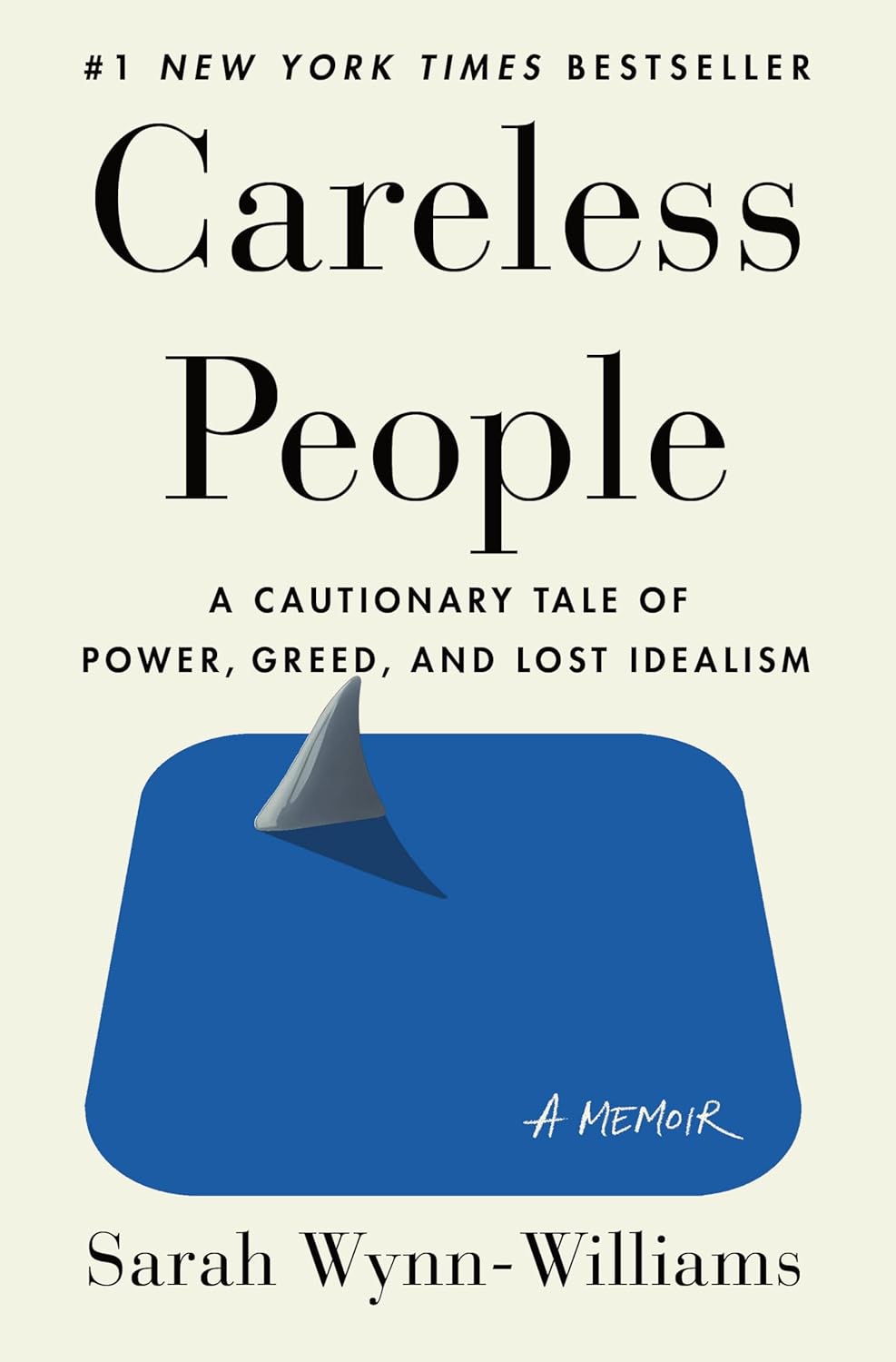
Review: Careless People

Careless People: A Cautionary Tale of Power, Greed, and Lost Idealism
By Sarah-Wynn-Williams
Macmillan
ISBN: 978-1035065929

In his 2021 book Social Warming, Charles Arthur concludes his study of social media with the observation that the many harms he documented happened because no one cared to stop them. “Nobody meant for this to happen,” he writes to open his final chapter.

In her new book, Careless People, about her time at Facebook, former New Zealand diplomat Sarah Wynn-Williams shows the truth of Arthur’s take. A sad tale of girl-meets-company, girl-loses-company, girl-tells-her-story, it starts with Wynn-Williams stalking Facebook to identify the right person to pitch hiring her to build its international diplomatic relationships. I kept hoping increasing dissent and disillusion would lead her to quit. Instead, she stays until she’s fired after HR dismisses her complaint of sexual harassment.

In 2011, when Wynn-Williams landed her dream job, Facebook’s wild expansion was at an early stage. CEO Mark Zuckerberg is awkward, sweaty, and uncomfortable around world leaders, who are dismissive. By her departure in 2017, presidents of major countries want selfies with him and he’s much more comfortable – but no longer cares. Meanwhile, then-Chief Operating Officer Sheryl Sandberg, wealthy from her time at Google, becomes a celebrity via her book, Lean In, written with the former TV comedy writer Nell Scovell. Sandberg’s public feminism clashes with her employee’s experience. When Wynn-Williams’s first child is a year old, a fellow female employee congratulates her on keeping the child so well-hidden she didn’t know it existed.

The book provides hysterically surreal examples of American corporatism. She is in the delivery room, feet in stirrups, ordered to push, when a text arrives: can she draft talking points for Davos? (She tries!) For an Asian trip, Zuckerberg wants her to arrange a riot or peace rally so he can appear to be “gently mobbed”. When the company fears “Mark” or “Sheryl” might be arrested if they travel to Korea, managers try to identify a “body” who can be sent in as a canary. Wynn-Williams’s husband has to stop her from going. Elsewhere, she uses her diplomatic training to land Zuckerberg a “longer-than-normal handshake” with Xi Jinping.

So when you get to her failure to get her bosses to beef up the two-person content moderation team for Myanmar’s 60 million people, rewrite the section so Burmese characters render correctly, and post country-specific policies, it’s obvious what her bosses will decide. The same is true of internal meetings discussing the tools later revealed to let advertisers target depressed teens. Wynn-Williams hopes for a safe way forward, but warns that company executives’ “lethal carelessness” hasn’t changed.

Cultural clash permeates this book. As a New Zealander, she’s acutely conscious of the attitudes she encounters, and especially of the wealth and class disparity that divide the early employees from later hires. As pregnancies bring serious medical problems and a second child, the very American problem of affording health insurance makes offending her bosses ever riskier.

The most important chapters, whose in-the-room tales fill in gaps in books by Frances Haugen, Sheera Frankel and Cecilia Kang, and Steven Levy, are those in which Wynn-Williams recounts the company’s decision to embrace politics and build its business in China. If, her bosses reason, politicians become dependent on Facebook for electoral success, they will balk at regulating it. Donald Trump’s 2016 election, which Zuckerberg initially denied had been significantly aided by Facebook, awakened these political aspirations. Meanwhile, Zuckerberg leads the company to build a censorship machine to please China. Wynn-Williams abhors all this – and refuses to work on China. Nonetheless, she holds onto the hope that she can change the company from inside.

Apparently having learned little from Internet history, Meta has turned this book into a bestseller by trying to suppress it. Wynn-Williams managed one interview, with Business Insider, before an arbitrator’s injunction stopped her from promoting the book or making any “disparaging, critical or otherwise detrimental comments” related to Meta. This fits the man Wynn-Williams depicts who hates to lose so much that his employees let him win at board games.