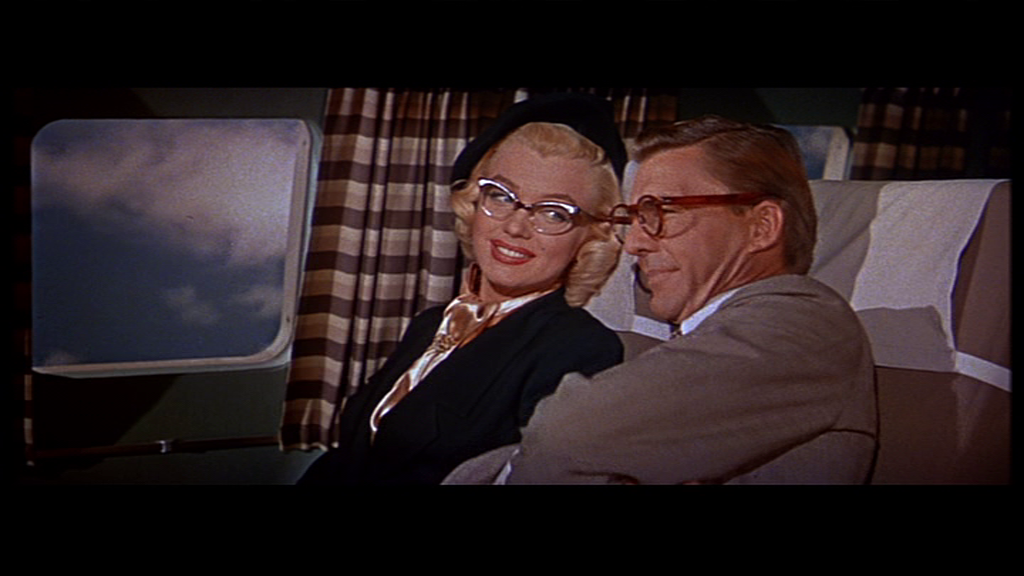
“The colors came back,” a friend said. He was talking about the change after he had cataract surgery. My clinician, a retired surgeon, said something similar, that patients come in and exclaim: “I can’t believe how blue the sky is!”
I didn’t have that.
Cataracts develop slowly, so many don’t perceive how bad their vision has become. I knew. Because: my cataracts made it progressively harder for opticians to fully correct my myopia, an effect I first noticed in early 2018. For the next five or six years, my prescription notched up, and I’d be able to see reasonably clearly for about six months after getting new glasses. The next six months I’d curse the lack of clarity. Repeat until late 2023, when they said I was “ready” for surgery. At that point, I was about 20/40 with glasses.
I delayed for a while, and then had my right eye done in March. The right eye is due in a couple of weeks. So I’ve had four months to explore the difference.
It has been fascinating. And very different from John Berger‘s account, or James Thurber’s fuzzy few days without glasses in The Admiral on the Wheel.
I told the clinician I thought that even if I hadn’t been *seeing* colors exactly right I was interpreting them correctly. That turns out to be mostly true. The sky looks blue, or blue enough, and greens, reds, and yellows render fairly accurately.
This makes sense. The clinician says they generally believe that cataracts block blue light. “Isn’t it just a yellow cast over everything?” a friend asked. Not really.
To review: the primary colors of light are red, blue, and green. Red and blue make magenta; blue and green make cyan; green and red make yellow. Color printers print all colors using those three mixed colors, plus black: CMYK. It’s the difference between additive and subtractive color mixing – that is, starting with black (no color) and adding light, versus starting with white (all colors) and subtracting it. This seems weird at first encounter because schools teach the primary colors of mixing paints, which, as an increasing number of people are pointing out, is all wrong for the digital era.
In real life, my biggest cataract-related color shift turns bright purple flowers a dead greyish pink. A friend’s bright lavender walls grey down. Given that the remaining cataract has continued to densify, my original assessment holds up: I wasn’t losing much color information. I knew my friend’s walls were lavender without being told.
The biggest difference for me is that opticians can fully correct my eyesight again. So the operation has made the world brighter, whiter, and brought back crisp focus. At a recent conference, I could sit in the back and read the slides for the first time in probably five years. Although: blue highlights on the metal chair frames from overhead spotlights disappeared when I closed my post-op eye. Fun!
But then I watched an episode of the TV show Hacks in which Jean Smart wears a bright gold and black dress (above). When I closed my right eye, it turned….salmon. My real-life sweater of nearly the identical color *does not do this*. It is clearly an artifact of cataract plus screen.
Using an RGB color generator, I can say my right eye sees the dress as close to 255-220-0. My left eye sees it as roughly 255-220-150. Bright orange (~255-153-51) on my laptop screen also notably shifts, to a medium hot pink (~255-153-150 ). This suggests my cataract shifts green. Why?
Most other things look close to the same. Among the few exceptions: on an episode of Curb Your Enthusiasm, Larry David’s dark olive shirt looks grey with the pre-op eye, and Cheryl Hines’s pale yellow shirt turns almost white. Does this mean that eye is seeing more blue?
Fluorescent lighting also produces interesting artifacts: a bright lime green poster seen through the cataract seemed aqua.
There’s obviously a logical explanation for this; I just can’t quite work it out. Someone who understands the composition of these lighting conditions could doubtless easily explain what’s going on there (and I hope someone will!).
One final story. A couple of years ago, I saw a particularly stunning sunset out my loft window. Went to get the phone, and snapped a shot. I got back a pale, washed-out nothingburger. Went and got the better, more controllable, digital camera and tried again. Still washed out. Well, damn modern cameras and their autocorrection to what they think you should have seen. I knew about this, because in 2020, when Californians tried to take pictures of their wildfire-caused orange sky, they got grey. Bah.
Cut to April 2025. Same window. My left eye sees a really intense pink and orange sunset. My right eye…sees a washed-out nothingburger. *It wasn’t the camera.*
So, by next month I will have a fully sharp, crisp, bright world on both sides instead of a slightly dim fuzzball on one side. I will feel better balanced, and be better able to play tennis and bike. And I won’t go blind. But there’s a price. Because my post-op eye can’t do close-up the same way, I will grieve the loss of the superpower of being able to read the tiniest print unaided for the rest of my life. And I’ll lose the good sunsets.
Illustrations: Deborah Vance (Jean Smart), in Hacks (S03e01, “Just for Laughs”).
Addendum: With the pre-operative (left) eye, the purple and pink-ish flowers in this photo look the same color. The orangey flowers are slightly pinker, so *nearly* but noticeably not, the same color.

Wendy M. Grossman is the 2013 winner of the Enigma Award. Her Web site has an extensive archive of her books, articles, and music, and an archive of earlier columns in this series. She is a contributing editor for the Plutopia News Network podcast. Follow on Mastodon or Bluesky.