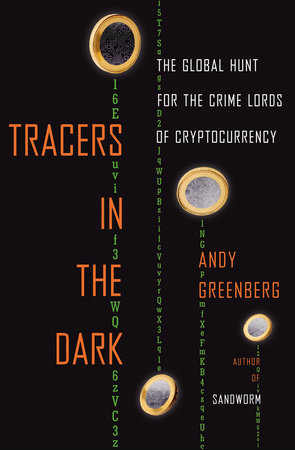
Review: Tracers in the Dark

Tracers in the Dark: The Global Hunt for the Crime Lords of Cryptocurrency
By Andy Greenberg
Doubleday
ISBN: 978-0-385-548/09-0

At the 1997 Computers, Freedom, and Privacy conference, the computer scientist Timothy C. May, a co-founder of the influential Cypherpunks mailing l|ist, presented the paper Untraceable Digital Cash, Information Markets, and BlackNet. In it, he suggested that the combination of the Internet, anonymous digital cash, and the possibility that anyone could be a “mint” (in the money sense) created the conditions for BlackNet, a market in stolen secrets, assassinations, and other illegal goods and services. In trying to stop it, he said, regulators and governments would invoke the “Four Horsemen of the Infocalypse”: nuclear terrorists, child pornographers, money launderers, and drug dealers.

Like all futurists, May was building on existing trends. Digital cash already existed in an early form, and governments were already invoking the Four Horsemen in opposing widespread access to strong encryption (they still are, in debates about the UK’s Online Safety bill. Still, his paper also imagined Wikileaks.

Almost certainly the unknown creator of bitcoin, Satoshi Nakomoto, knew the cypherpunks list. In any event, at the beginning, bitcoin appeared to be – and the community surrounding it sometimes billed it as – sufficiently anonymous and untraceable to enable May’s BlackNet. Tl;dr: not for long.

In the highly readable Tracers in the Dark, veteran Wired journalist Andy Greenberg tells the story of step-by-step technical advances that enabled law enforcement, tax authorities, and others to identify and arrest the owners and users of sites dealing in illegal goods like Silk Road, AlphaBay, and Welcome to Video, and take the sites down.

The essential problem for criminals seeking secrecy is, of course, that the public blockchain indelibly records every transaction for all to see for all time. Not only that, but the bigger the pile of data gets the more useful information it yields to analysis. Following the money works.

Greenberg’s series of detective stories begins and ends with Sarah Meiklejohn, now a professor in cryptography and security at University College London. As a graduate student circa 2012, she began studying how bitcoin was being used, and developed clustering techniques that ultimately made it possible to understand what was happening inside the network and identify individual users and owners. Following in her footsteps are an array of interested detectives: the fledgling company Chainalysis, Internal Revenue Service, the Drug Enforcement Agency, and international police. She herself declined a well-paid offer to join them; she sees her role as that of an impartial researcher issuing a public advisory.

At every step the investigators had help from the criminals themselves, who over and over again were remarkably sloppy about their own security. Ross Ulbricht was identified as the administrator of Silk Road because he’d once posted his real email address to a coding forum. Alexandre Cazes, the owner of AlphaBay, was successfully arrested because he kept helpfully posting details of his many female conquests to an online forum, helping the agents following him build a detailed understanding of his whereabouts.

Each takedown has been followed by efforts to improve blockchain privacy. But even so, investigators have years’ worth of leads they can still follow up. And by then, as Danish entrepreneur Michael Gronager says toward the end of the book, referring to the then new, more resistant technologies Monero and Zcash, “Any of these systems, anything that’s developed, you always see a couple of years alter, someone finds something.” Nothing’s perfect.
The privacy price of food insecurity

One of the great unsolved questions continues to be: what is my data worth? Context is always needed: worth to whom, under what circumstances, for what purpose? Still, supermarkets may give us a clue.

At Novara Media, Jake Hurfurt, who runs investigations for Big Brother Watch, has been studying suprmarket loyalty cards. He finds that increasingly only loyalty card holders have access to special offers, which used to be open to any passing customer.

Tesco now and Sainsburys soon, he says, “are turning the cost-of-living crisis into a cost-of-privacy crisis”,

Neat phrasing, but I’d say it differently: these retailers are taking advantage of the cost-of-living crisis to extort desperate people ito giving up their data. The average value of the discounts might – for now – give a clue to the value supermarkets place on it.

But not for long, since the pattern going forward is a predictable one of monopoly power: as the remaining supermarkets follow suit and smaller independent shops thin out under the weight of rising fuel bills and shrinking margins, and people have fewer choices, the savings from the loyalty card-only special offers will shrink. Not so much that they won’t be worth having, but it seems obvious they’ll be more generous with the discounts – if “generous” is the word – in the sign-up phase than they will once they’ve achieved customer lock-in.

The question few shoppers are in a position to answer while they’re strying to lower the cost of filling their shopping carts is what the companies do with the data they collect. BBW took the time to analyze Tesco’s and Sainsburys’ privacy policies, and found that besides identity data they collect detailed purchase histories as well as bank accounts and payment information…which they share with “retail partners, media partners, and service providers”. In Tesco’s case, these include Facebook, Google, and, for those who subscribe to them, Virgin Media and Sky. Hyper-targeted personal ads right there on your screen!

All that sounds creepy enough. But consider what could well come next. Also this week, a cross-party group of 50 MPs and peers and cosinged by BBW, Privacy International and Liberty, wrote to Frasers Group deploring that company’s use of live facial recognition in its stores, which include Sports Direct and the department store chain House of Fraser. Frasers Group’s purpose, like retailers and pub chains were trialing a decade ago , is effectively to keep out people suspected of shoplifting and bad behavior. Note that’s “suspected”, not “convicted”.

What happens as these different privacy invasions start to combine?

A store equipped with your personal shopping history and financial identity plus live facial recognition cameras, knows the instant you walk into the store who you are, what you like to buy, and how valuable a customer your are. Such a system, equipped with some sort of socring, could make very fine judgments. Such as: this customer is suspected of stealing another customer’s handbag, but they’re highly profitable to us, so we’ll let that go. Or: this customer isn’t suspected of anything much but they look scruffy and although they browse they never buy anything – eject! Or even: this journalist wrote a story attacking our company. Show them the most expensive personalized prices. One US entertainment company is already using live facial recognition to bar entry to its venues to anyone who works for any law firm involved in litigation against it. Britain’s data protection laws should protect us against that sort of abuse, but will they survive the upcoming bonfire of retained EU law?

And, of course, what starts with relatively anodyne product advertising becomes a whole lot more sinister when it starts getting applied to politics, voter manipulation and segmentation, and the “pre-crime” systems

Add the possibilities of technology that allows retailers to display personalized pricing in-store, just like an online retailer could do in the privacy of your own browser, Could we get to a scenario where a retailer, able to link your real world identity and purchasing power to your online nd offline movements could perform a detailed calculation of what you’d be willing to pay for a particular item? What would surge pricing for the last remaining stock of the year’s hottest toy on Christmas Eve look like?

This idea allows me to imagine shopping partnerships, where the members compare prices and the partner with the cheapest prices buys that item for the whole group. In this dystopian future, I imagine such gambits would be banned.

Most of this won’t affect people rich enough to grandly refuse to sign up for loyalty cards, and none of it will affect people rich and eccentric enough to do source everything from local, independent shops – and, if they’re allowed, pay cash.

Four years ago, Jaron Lanier toured with the proposal that we should be paid for contributing to commercial social media sites. The problem with this idea was and is that payment creates a perverse incentive for users to violate their own privacy even more than they do already, and that fair payment can’t be calculated when the consequences of disclosure are perforce unknown.

The supermarket situation is no different. People need food security and affordability, They should not have to pay for that with their privacy.

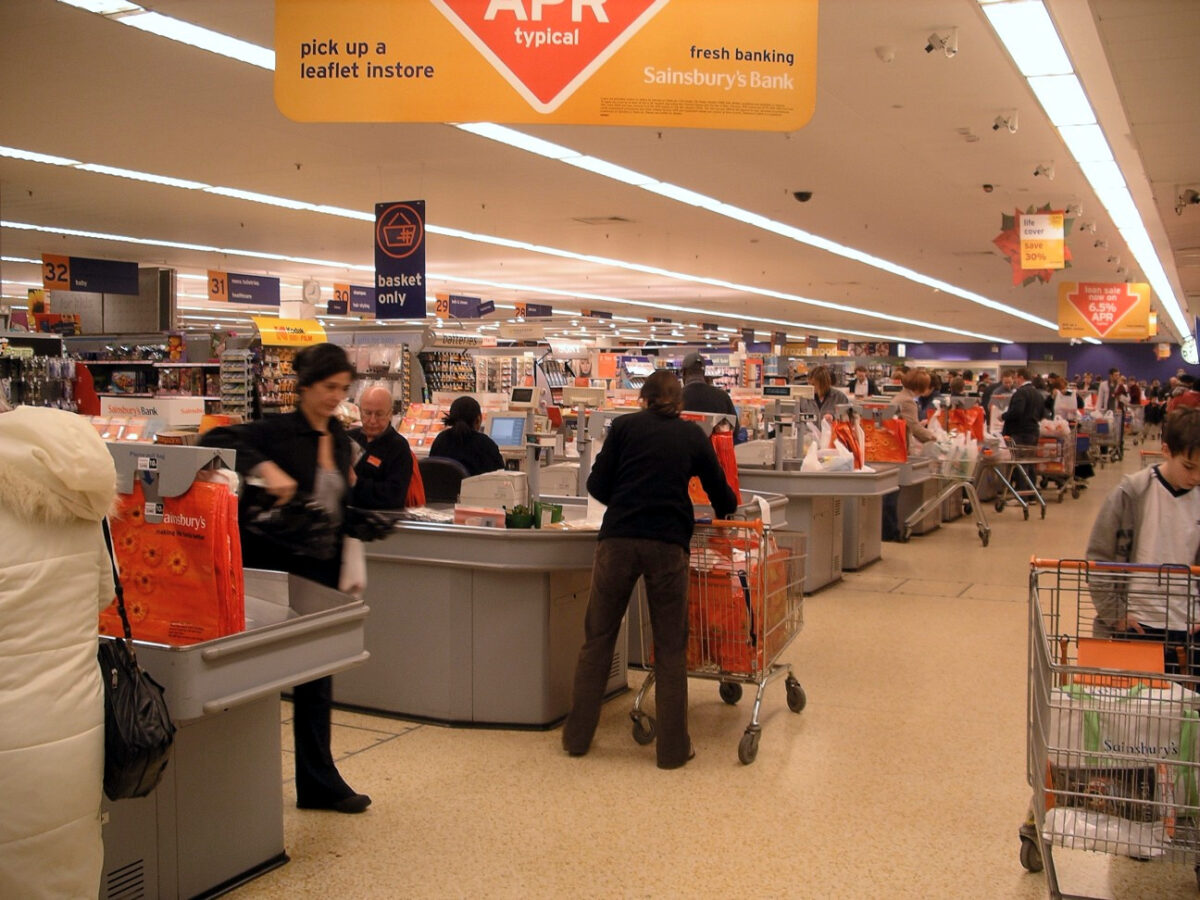
Illustrations: .London supermarket checkout, 2006 (via Wikimedia.

Wendy M. Grossman is the 2013 winner of the Enigma Award. Her Web site has an extensive archive of her books, articles, and music, and an archive of earlier columns in this series. Follow on Mastodon or Twitter.

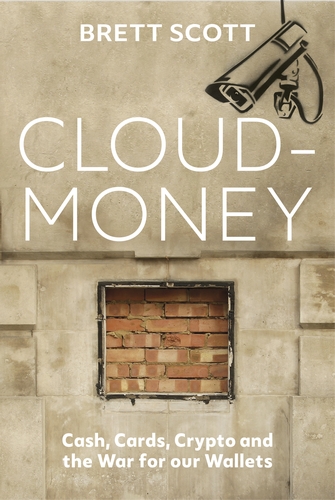
Review: Cloudmoney

Cloudmoney: Cash, Cards, Crypto, and the War for our Wallets
By Brett Scott
Publisher: Bodley Head
ISBN: 978-1-847-92587-9

Three years ago, the area around the local tube station included a bank and four ATMs. Come the pandemic, the bank closed, never to return, and so did two of the ATMs. The loss of the bank gave a couple of the chain stores an excuse to refuse to take cash. But they’re a minority in an area full of independent local shops, who recognize that many of their customers are cash users. Journey into some parts of central London, however, and cash gets you ghosted.

We are told that the cashless future is what we want: it’s more convenient (except when the system is down, the app needs to be rebooted, or there’s no Internet connection). The reality, as “monetary anthropologist” and former broker Brett Scott points out in his book Cloudmoney, is that despite this inevitability narrative, one reason electronic/digital payments are more convenient is a deliberate effort to make cash harder to access. Often, promoters claim the cashless society is – or will be – more financially inclusive. Yet, as Scott recounts, that “inclusion” in the remote global economy often brings with it the exclusion of locally-controlled, less formal economies. Less financial inclusion, more *enclosure* and “corporate seep”.

Scott’s central thesis is simple: once the forces of Big Tech and Big Finance have merged, they will have a hitherto unimaginable amount of power over all of us. I have some sympathy with this argument. People forget that it was through the banks that Gilead was brought into being in Margaret Atwood’s The Handmaid’s Tale. All they had to do was locate all the accounts tagged “F” and turn off access until a suitable male came forward to claim them. This is the power of cloudmoney – money that exists for us only in the form of numbers that represent promises to pay. Scott is not predicting a specific dystopia; but he does want to propagate a counterbalancing narrative to the “liberation” every new fintech app pretends to promise while scarfing up all our personal data. In his campaign to protect the public system of cash, he sometimes finds himself in the company of conspiracy theorists whose other ideas he rejects.

What is less clear is where bitcoin and other cryptocurrencies fit in. They also started with rhetoric: they were digital cash, digital gold, a mechanism for bypassing the world’s banks and governments. In practice, so far, they haven’t succeeded at any of these things, and even in El Salvador, where bitcoin is legal tender, you can’t use it to buy a box of oatmeal in a supermarket.

The story technology companies tell is, of course, that they are disrupting the stodgy, antiquated world of traditional finance. Instead, what Scott sees is plain old automation that serves that world and tightens its control. Almost every new service, whatever the rhetoric it starts with, from credit cards to Paypal to Apple Pay to Facebook’s failed Libra cryptocurrency, becomes a front end for bank accounts for the same reason that robbers always focused on them: that’s where the money is. The exception is cash – slow, partially disconnected cash that enables transactions that aren’t caught in what Scott calls the “digital mesh” of corporate capitalism. No wonder they hate it.