Split

In an abrupt reversal, UK prime minister Keir Starmer announced this week that the digital IDs he said in September would be mandatory for proving the right to work will now be…not so much. The announcement appears to reinstate the status quo: workers can continue proving their right to work by showing a passport or e-visa.

It’s not clear what led to the change, although some – commenters on social media, former Labour home secretary David Blunkett – suggest opponents “won”. The reality is that digital IDs are probably not really going away. However, making them optional is an important step in the right direction. A lot more is needed to develop a system that works for people instead of for governments.

***

Ten days on, the discovery that Xai’s Grok chatbot was being used to “nudify” images of women and children is still firing headlines, especially since the BBC reported that the Internet Watch Foundation had found “criminal images” of girls between 11 and 13 that appeared to have been Grok-generated. Child sexual abuse material is illegal in the UK, as in many other countries, no matter how it’s created or whether it’s real or synthetic. On Wednesday, Elon Musk asked on X if anyone could break Grok’s image moderation.

Last Friday, the Independent, among others, reported that X had turned off Grok’s image generation for all but the site’s (paying) verified users. On Monday, Starmer warned that X could lose the right to self-regulate if it could not control Grok. On Tuesday, Ofcom said it was launching an investigation, and Starmer told the House of Commons that X was “acting to ensure full compliance with the law”. In fact, it later came out, he was basing this information on media reports but had not himself been in contact with X himself. His government is now planning legislation to criminalize this type of software. Yesterday, Musk announced X would geoblock the AI tool in countries where it’s illegal. This morning, the Guardian reports that the feature is still not blocked in the Grok app.

As an unexpected side effect, these revelations have reignited divisions in the venerable and venerated elite scientists’ Royal Society, which elected Elon Musk an Overseas Fellow in 2018.

To recap: in August 2024, Nicola Davis reported at the Guardian that a 74 Fellows had written to the Society calling for Elon Musk’s expulsion, after Musk tweets promoting unrest in the UK and propagating scientific disinformation.

In late 2024, the developmental neuropsychologist Dorothy M. Bishop blogged that she had resigned from the Royal Society to protest Elon Musk’s continued membership as an Overseas Fellow.

Further resignations have followed. Next up, iIn February, was professor of systems biology Andrew Millar, who deplored . Around the same time, more than 1,000 scientists signed an open letter to the Society’s then-president Andrew Smith calling for Musk’s ouster.

In March, Andrew Sella, a chemist, returned the Society’s Michael Faraday prize for science communication, explainingthe society’s inaction. Also that month, on X neural networking pioneer Geoff Hinton called for Musk’s expulsion. There was another burst of calls for Musk to be expelled in September, when he addressed a far-right rally organized by Tommy Robinson.

At the end of 2025, the Royal Society changed presidents. In April 2025, the incoming president, geneticist and Nobel Laureate Paul Nurse, taking the position for a rare second time, told The Times that he had written to Musk asking him if he could do something to improve the situation of American science, adding that given the damage he has caused to the “scientific endeavor in the United States” he should consider resigning from the Society.

In retrospect, more attention should have been paid to Nurse’s position that Musk should not be expelled, which he justified by saying that many Fellows were “odd”. The Guardian published more details about that correspondence in July.

A few days ago, professor of materials science Rachel Oliver published an open letter to Nurse asking him to reconsider his argument that Fellows should only be expelled if their science proved “fraudulent or highly defective”. Oliver argues that this stance grants “a licence to harass to the already powerful people on whom the Society bestows fellowship”.

She was responding to this week’s report in which Nurse doubled down on those overlooked comments, arguing that the code of conduct Fellows cited to justify expulsion might need to be revised because it resembled an employer’s code of conduct, and Fellows are not employees. He also took another shot at members who aren’t Musk, pointing to a portrait of Isaac Newton and saying, “He was a very nasty piece of work, yet we revere him.” I’m not sure that “we tolerated assholes in the past so we should continue to do so” is the persuasive argument he thinks it is.

It’s also clear that the Royal Society will continue to face public and private censure, no matter what it does now. This row will resurface every time Musk is in the news. The Royal Society is damned whatever it decides; it can’t keep hoping Musk will gentlemanly fall on his sword.

Illustrations: Sir Isaac Newton, as seen in the National Portrait Gallery, London (via Wikimedia).

Also this week:
At the Techgrumps podcast, #3.36, Men are weird: The Return of the Glasshole.

Wendy M. Grossman is an award-winning journalist. Her Web site has an extensive archive of her books, articles, and music, and an archive of earlier columns in this series. She is a contributing editor for the Plutopia News Network podcast. Follow on Mastodon or Bluesky.
Choice

The first year it occurred to me that a key consideration in voting for the US president was the future composition of the Supreme Court was 1980: Reagan versus Carter. Reagan appointed the first female justice, Sandra Day O’Connor – and then gave us Antonin Scalia and Anthony Kennedy. Only O’Connor was appointed during Reagan’s first term, the one that woulda, shoulda, coulda been Carter’s second.

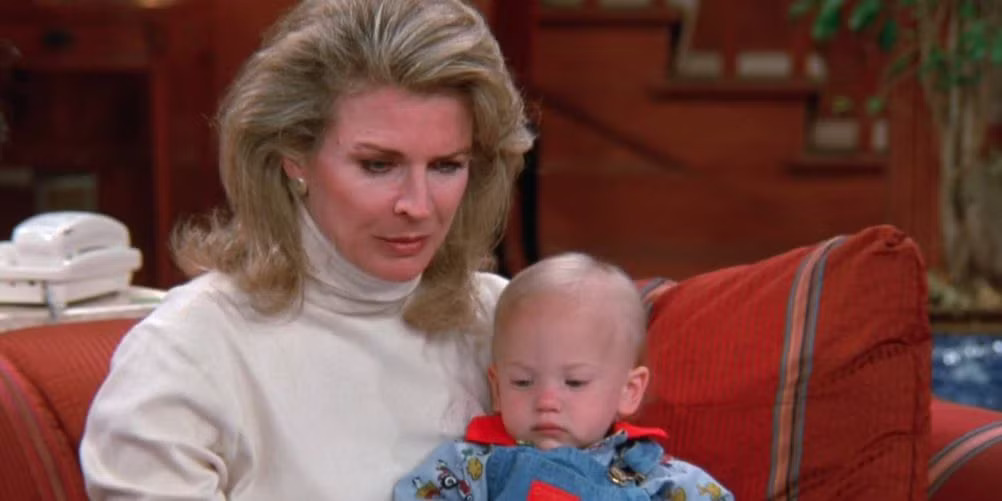
Watching American TV shows and movies from the 1980s and 1990s is increasingly sad. In some – notably Murphy Brown – a pregnant female character wrestles with deciding what to do. Even when not pregnant, those characters live inside the confidence of knowing they have choice.

At the time, Murphy (Candice Bergen) was pilloried for choosing single motherhood. (“Does [Dan Quayle] know she’s fictional?” a different sitcom asked, after the then-vice president critized her “lifestyle”.) Had Murphy opted instead for an abortion, I imagine she’d have been just as vilified rather than seen as acting “responsibly”. In US TV history, it may only be on Maude in 1972 that an American lead character, Maude (Bea Arthur), is shown actually going through with an abortion. Even in 2015 in an edgy comedy like You’re the Worst, that choice is given to the sidekick. It’s now impossible to watch any of those scenes without feeling the loss of agency.

In the news, pro-choice activists warned that overturning Roe v. Wade would bring deaths, and so it has, but not in the same way as they did in the illegal-abortion 1950s, when termination could be dangerous. Instead, women are dying because their health needs fall in the middle of a spectrum that has purely elective abortion at one end and purely involuntary miscarriage at the other. These are not distinguishable *physically*, but can be made into evil versus blameless morality tales (though watch that miscarrying mother, maybe she did something).

Even those who still have a choice may struggle to access it. Only one doctor performs abortions in Mississippi ; he also works in Alabama and Tennessee.

So this time women are dying or suffering from lack of care when doctors can’t be sure what they are allowed do under laws that are written by people with shockingly limited medical knowledge.

Such was the case of Amber Thurman, a 28-year-old Georgian medical assistant who died of septic shock after fetal tissue was incompletely expelled after a medication abortion, which she’d had to travel hundreds of miles to North Carolina to get. It’s a very rare complication, but her life could probably have been saved by prompt action – but the hospital had no policy in place for septic abortions under Georgia’s then-new law. There have been many more awful stories since – many not deaths but fraught survivals of avoidable complications.

If anti-abortion activists are serious about their desire to save the life of every unborn child, there are real and constructive things they can do. They could start by requiring hospitals to provide obstetrics units and states to imrpove provision for women’s health. According to March of Dimes, 5.5 million American women in are caught in the one-third of US counties it calls “maternity deserts”. Most affected are those in the states of North Dakota, South Dakota, Alaska, Oklahoma, and Nebraska. In Texas, which banned abortion after six weeks in 2021 and now prohibits it except to save the mother’s life, maternal mortality rose 56% between 2019 and 2022. Half of Texas counties, Stephanie Taladrid reported at The New Yorker in January, have no specialists in women’s health.

“Pro-life” could also mean pushing to support families. American parents have less access to parental leave than their counterparts in other developed countries. Or they could fight to redress other problems, like the high rate of Black maternal mortality.

Instead, the most likely response to the news that abortion rates have actually gone up in the US since the Dobbs decision is efforts to increase surveillance, criminalization, and restriction. In 2022, I imagined how this might play out in a cashless society, where linked systems could prevent a pregnant woman from paying for anything that might help her obtain an abortion: travel, drugs, even unhealthy foods,

This week, at The Intercept, Debbie Nathan reports on a case in which a police sniffer dog flagged an envelope that, opened under warrant, proved to contain abortion pills. It’s not clear, she writes, whether the sniffer dogs actually detect misopristol and mifepristone, or traces of contraband drugs, or just responding to an already-suspicious handler’s subtle cues, like Clever Hans. Using the US Postal Service’s database of images of envelopes, inspectors were able to identify other parcels from the same source and their recipients. A hostile administration could press for – in fact, Republican vice-presidential candidate JD Vance has already demanded – renewed enforcement of the not-dead-only-sleeping Comstock Act (1873), which criminalizes importing and mailing items “intended for producing abortion, or for any indecent or immoral use”.

There are so many other vital issues at stake in this election, but this one is personal. I spent my 20s traveling freely across the US to play folk music. Imagine that with today’s technology and states that see every woman of child-bearing age as a suspected criminal.

Illustrations: Murphy Brown (Candice Bergen) with baby son Avery (Haley Joel Osment).

Wendy M. Grossman is the 2013 winner of the Enigma Award. Her Web site has an extensive archive of her books, articles, and music, and an archive of earlier columns in this series. She is a contributing editor for the Plutopia News Network podcast. Follow on Mastodon.