Banned

Some policies are popular until people examine the details. This may be happening with social media bans like the one UK prime minister Keir Starmer announced this week. It will prohibit under-16s from using the main social media platforms or livestreaming, ban under-18s from using “romantic simulation” chatbots, and limit strangers’ ability to contact under-16s via direct messaging on gaming platforms. More detail will come in July; the government will also consider imposing a nightly curfew and requiring breaks in scrolling for under-18s. As so often, it’s possible to support the goals of policy proposals while disagreeing with the proposals themselves.

The BBC reports that 90% of the parents who responded to the recent consultation backed the ban (although the panel survey report is less clear-cut). Yet Ofcom’s May 2026 report shows more nuance: more than half of parents agree that the benefits of being online outweigh the risks. Narrowing that to social media use, 46% of parents still think the benefits outweigh the risks, dropping to 33% for parents of eight to 12-year-olds.

The move has been met with some skepticism from Cambridge psychologists, and even from some veteran child safety campaigners such as Jim Gamble.

The BBC reports that Ian Russell, the father of Molly Russell, a 14-year-old whose suicide in 2017 was attributed to viewing harmful content online, has called the ban a blunt instrument that will merely cause more problems. Russell argues for more thought, less haste.

At his blog, Lewis Goodall connects the haste to Starmer’s government’s precarity, which he thinks may doom the policy despite widespread concern about children online. Goodall, too, isn’t sure it’s the right policy. As we’ve also noted here before, this government is simultaneously pushing to lower the voting age to 16. At ConservativeHome, John Oxley points out the absurdity of banning these new voters from accessing social media to look up candidates’ policies. The teens the Guardian interviewed varied in their views.

It’s also true that today’s teens have less independence and fewer options for offline socializing than older generations did. As Alec Muffett writes on Bluesky, you cannot force 2020s children into 1980s childhoods because so much infrastructure is gone. When you take away online interaction, what’s left?

The Open Rights Group recaps 13 years of online child safety measures, beginning with ISP and mobile network filters in 2013 and ending with this week’s announcements. ORG argues that taking a systems view shows that these escalating online safety measures leave the underlying problem untouched: the feedback loop that ought to drive users away when they encounter awful content is broken.

Because Australia was the first country to implement a social media ban, it’s the model everyone looks at. There’s been a lot of discussion about whether the ban “works”, based on how well it’s keeping teens off social media. A survey of Australian parents found that two-thirds of teens still have social media accounts. Other research says that of those who’ve lost their accounts, half say the ban limits their access to news.

But is that what we should mean by “work”? By that standard, testing someone for allergies by eliminating specific foods would “work” if the person didn’t consume them. But what we want to know is whether the person is actually allergic to those foods, or, by analogy, whether the ban remediates the harms – depression, anxiety, and other mental health issues – that politicians claim to be worried about. A social media ban sounds simple; addressing climate change, the state of the economy, the cost of education, and the fear that there will be no jobs is hard.

ORG contends that enabling people to move between social networks at will, improving competition, and breaking up the platforms would do more to counter online harms than the present approach. This week also provided an example of how not to do this.

The newly launched, fully European social network “W Social” is based on the AT protocol that powers Bluesky, and limited to identified humans. Per Euronews, W Social is a privately owned Swedish startup whose investors are other European companies. In order to apply for an account, you must first provide to W Identity, a separate entity, your name, date of birth, phone number, address, passport, and photo. You then give permission to W Identity to give W Social your account number, date of birth, and passport country. You can only have one account.

Although Anna Zeiter, the Swiss CEO of W, which is a subsidiary of Sweden-based climate action platform We Don’t Have Time, is described as a “privacy expert”, the amount and sensitivity of the information being demanded is disproportionate, especially as there is barely any declining, especially among young people. What if they created a ban and nobody came?

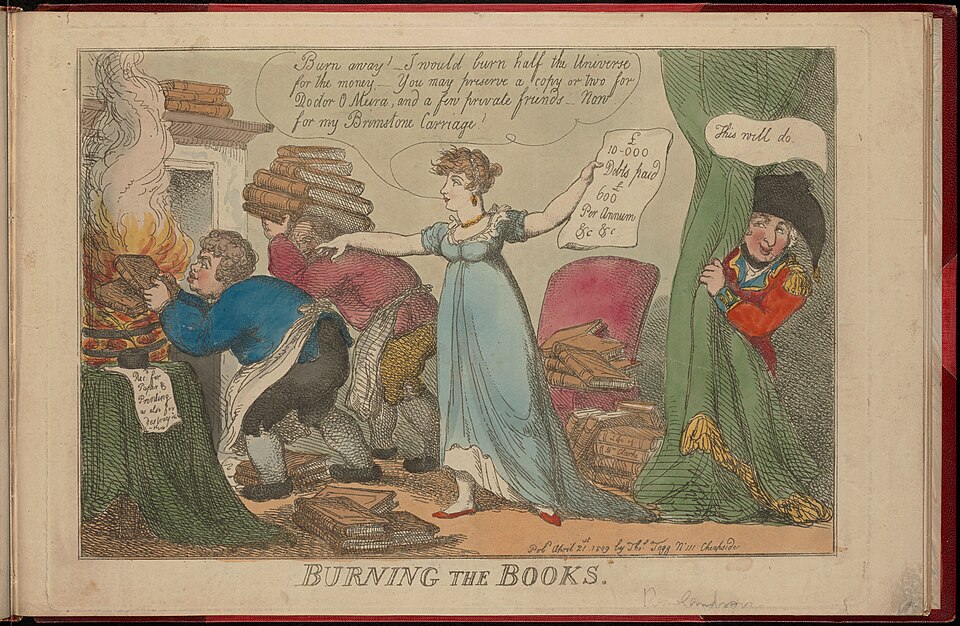
Illustrations: Children swimming in the summer, by Japanese artist Ando Hiroshige, 1797-1858 (via Smithsonian collection.

Wendy M. Grossman is an award-winning journalist. Her Web site has an extensive archive of her books, articles, and music, and an archive of earlier columns in this series. She is a contributing editor for the Plutopia News Network podcast. Follow on Mastodon or Bluesky.

Technology distinguishable from magic

This week, a regional court in Munich issued what may be a landmark decision: it ruled that Google is liable for the content of its “AI Overviews”. The court was careful to distinguish between these, which Google’s algorithms generate, and search results, which link to content on third-party websites Google does not control. In other words, Google owns its own mistakes. The court awarded 80% of costs to the plaintiffs, two Munich-based publishers who claimed that the company spread damaging false information about them by linking them to scams in these AI-generated summaries.

As Max Bastian writes at Decoder, the ruling could set precedents for other companies. Google has yet to comment, but presumably will appeal. Away from AI is certainly not the direction the company wants to go; it’s spent the last couple of years building generative AI more and more deeply into its search, hoping to keep users locked in instead of chasing off to other sites. (Ironically, bouncing users off to other sites was the reason Yahoo refused to buy it in 1998, when the received business model was keeping users on your own site as long as possible.)

Google tried to argue that users should do their own fact-checking. But, as the court seems to have understood, where search results send you to the source page, AI Overviews look complete and don’t always offer sourcing to check. A study conducted for the New York Times found in an analysis of more than 4,000 searches that AI Overviews produced using the Gemini 2 model were accurate 85% of the time, rising to 91% when using Gemini 3 – about average for these systems. Enter the Law of Truly Large Numbers: 91% only sounds pretty good until you multiply the remaining 9% by billions to calculate the millions of wrong answers being disseminated every single day. Oumi, the startup that performed the analysis, found the AI Overviews included sources such as Facebook and Reddit posts, drew incorrect information even from authoritative sources, and are prone to manipulation. The article notes that Google disputes the analysis, saying that the benchmarks were developed by OpenAI and themselves contain inaccuracies.

The Munich court ordered Google to stop repeating the claims about the publishers, and awarded the publishers 80% of costs. It also rejected Google’s attempt to frame the issue as one of freedom of speech, calling the AI Overviews, “above all an expression of Google’s business activities”.

One reason the judge’s ruling is so significant is that most approaches for dealing with misinformation that have been mooted to date are at human, instead of computer, scale. Fact-checking, for example, while valuable, moves very, very slowly, one claim at a time. If the ruling stands, it will help tackle this type of misinformation at source.

***

Politicians like to talk as if the moon they want is available if the industry would just stop being obstructive. With AI’s capabilities in headlines everywhere, they are now demanding that phones should block children from taking, viewing, or sharing nude photos. This is the policy Keir Starmer announced this week in a speech, based on claims from the British company SafetoNet. The government has since provided more detail. Mic Wright has a round-up of press reactions. At the Daily Telegraph, Big Brother Watch director Silkie Carlo provides a strong civil liberties objection.

So far, neither Apple nor Google has said much. At New Scientist, Chris Stokel-Walker notes that both companies already have some controls in place, but spreading them through third-party apps poses challenges, especially as some phones’ operating systems aren’t recent enough to have the more sophisticated parental controls in the first place.

The moral may be: if you tell people your technology is magic, don’t be surprised when they expect it to *be* magic.

***

This week I had to verify my identity for Companies House. This is supposed to be a straightforward matter of creating a Gov One login, entering some details of a government-issued ID, and uploading a photo. The website was discontented: it couldn’t find my address, (is my century-old home too old to be in the database?), and didn’t accept the details I entered. Eventually, it offered two alternatives: use a phone app, or present myself in person at a preselected post office.

The app balked. It couldn’t open its links even though I’d authorized it. So, in this year of two thousand and twenty-six I got on a train to go to the nearest remaining post office that could perform the necessary rituals to show them first a QR code to access my application and then the ID, whose information is digitally held but had to be retyped on the post office tablet, and finally pose for a photo for the system – not the post office human – to compare and match. Some of those steps took several tries to mollify the system. Naturally, they don’t report whether you’ve passed until after you’ve gone home.

These are the people who want to create a digital ID infrastructure. I can only assume that if they ever get that system up and running actually using it will involve faxing things because by then all the post offices will be gone.

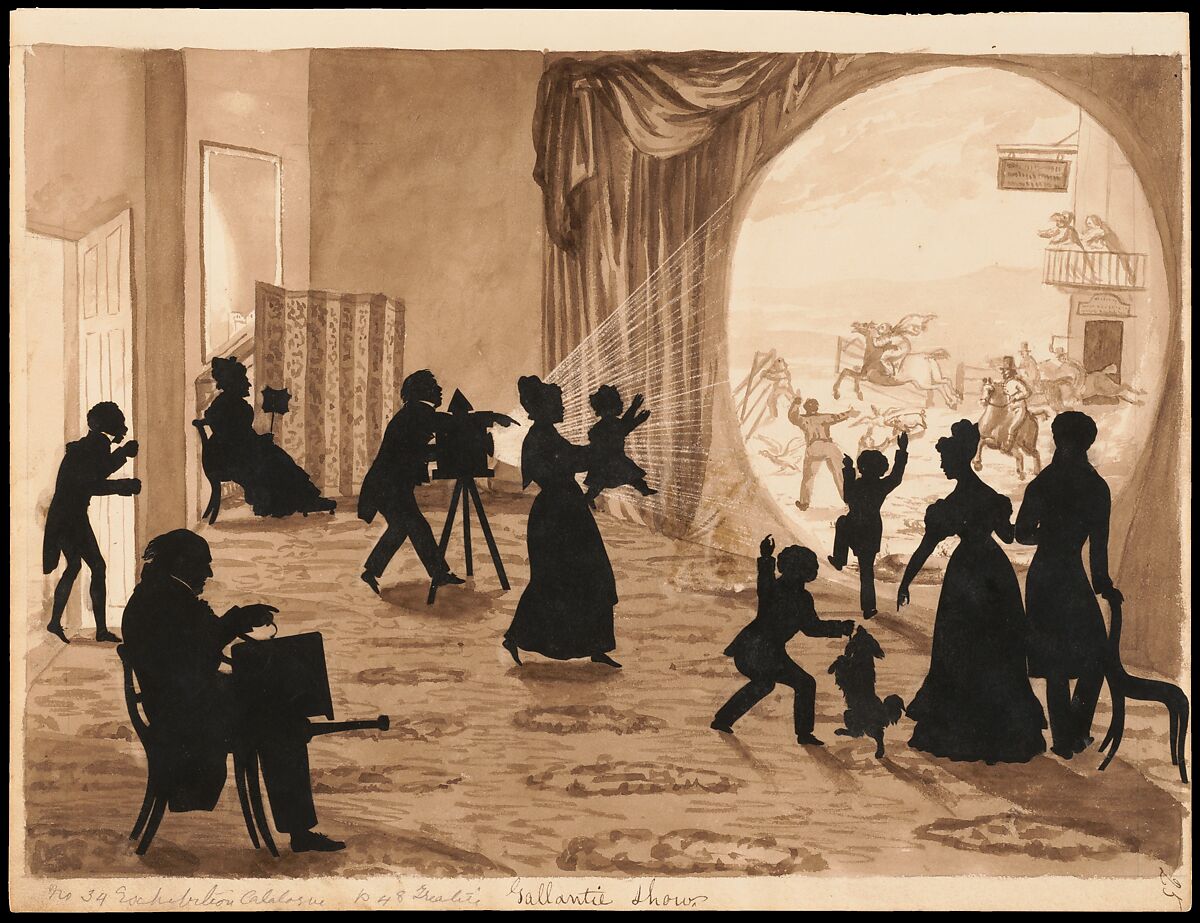
Illustrations: “The Magic Lantern”, by Auguste Edouart, circa 1835 (via The Met); at one time we thought that technology was magic.

Also this week:
At the Plutopia podcast, we talk to about her new book, Bad Influence.
The TechGrumps podcast episode, 3.41: The KardashElons of AI.

Wendy M. Grossman is an award-winning journalist. Her Web site has an extensive archive of her books, articles, and music, and an archive of earlier columns in this series. She is a contributing editor for the Plutopia News Network podcast. Follow on Mastodon or Bluesky.
Disconnexion

One thing we left out in last week’s complaint is generative AI’s undoubted ability to magnify the worst of human online behavior. A few days ago, the world discovered that X’s chatbot, Grok, can be commanded to “nudify” images of women and children – that is, digitally remove their clothes without their consent. A number of commenters also note that some of the same British politicians who are calling out X and Grok about this and who more broadly insist on increasing restrictions in the name of online safety nonetheless continue to post there. Even Ashley St. Clair, the mother of one of Elon Musk’s sons, is unable to get these images taken down. Some ministers have called for banning this form of deepfake software.

Among those calling for Elon Musk to act “urgently” are technology secretary Liz Kendall and prime minister Keir Starmer. The BBC reported this morning (January 9) that the government is calling on Ofcom to use “all its powers”. At Variety, Naman Rathandran reports that X has moved AI image editing behind a paywall.

On January 2, at the National Observer, Jimmy Thompson calls on the Canadian government to delete their accounts. On Wednesday, the Commons women and equalities committee announced it would stop using X. As of January 8, both Kendall and Starmer are still posting on X, along with the UK’s Supreme Court and the Regulatory Policy committee and doubtless many others. Ofcom, the regulatory agency in charge of enforcing the Online Safety Act, posted a statement on January 5 saying it has contacted X and plans a “swift assessment to determine whether there are potential compliance issues that warrant investigation”. At the Online Safety Act Network, Lorna Woods explains the relevant law.

My guess is that few politicians manage their own social media – an extreme form of mental compartmentalization – and their aides are schooled in the belief that “we must meet the audience where they are”. In that sense, these accounts are not ordinary users, who use social media to connect to their friends and other interesting people. Politicians, like many others who are paid to show off in public, use social media to broadcast, not so much to participate. But much depends on whether you think that Grok’s behavior is one piece of a fundamental structural problem with X and its ownership or whether you believe it’s an isolated ill-thought-out feature to be solved by tweaking software, a distinction Jason Koebler explores at 404 Media.

The politicians’ accounts doubtless predate Musk’s takeover. Twitter was – and X is – small compared to other social media. But the short-burst style perfectly suited journalists, who gave it far more coverage than it probably deserved. Politicians go where they perceive the public to be, which is often signaled by media coverage.

It’s not necessarily wrong for politicians and government agencies to argue that they should be on X to serve their constituents who use it. But to legitimize that claim they should also be cross-posting on every significant platform, especially the open web. We can then argue about the threshold for “significant”. At a guess, it’s bigger than a blog but smaller than Mastodon, where politicians are notoriously absent.

***

The early 2020s’ exciting future of cryptocurrencies has gotten lost in the distraction of the last couple of years’ excitement over our new future of technologies pretending to be “smart”. In 2023’s “crypto winter”, we thought anyone still interested was either an early booster or thought they could smell profit. As Molly White wrote this week, they’ve spent the last two years nourishing grudges and building a political machine that could sink large parts of the economy.

More quietly, as Dave Birch predicted in 2017 (and repeated in his 2020 book, The Currency Cold War) “serious people” were considering their approach. Among them, Birch numbered banks, governments, and communities.

Now, governments are hatching proposals. As 2025 ended, the European Council backed the European Central Bank’s digital euro plan; the European Parliament will vote on it this year. The Financial Times reports that this electronic alternative to cash could help European central bankers pull back some control over electronic retail payments from the US organizations that dominate the field. The ECB hopes to start issuing the currency in 2029. In the UK, the Bank of England is mulling the design of the digital pound. The International Monetary Fund sees the digital euro as a continuation of financial stability.

Birch dates government interest to Facebook’s now-defunct 2019 cryptocurrency plan. Today, I imagine new motives: the US’s diminishing reliability as an ally raises the desirability of lessening reliance on its infrastructure generally. Visa, Mastercard, and other payment mechanisms largely transit US systems, a reality the FT says European banks are already working to change. In March, ECB board member Philip R. Lane argued that the digital euro will foster monetary autonomy.

We’ll see. The Economist writes that many countries are recognizing cash’s greater resilience, and are rethinking plans to go all-digital.

It remains hard to know how much central bank digital currencies will matter. As I wrote in 2023, there are few obvious benefits to individuals. For most of us the problem isn’t the mechanism for payments, it’s finding the money.

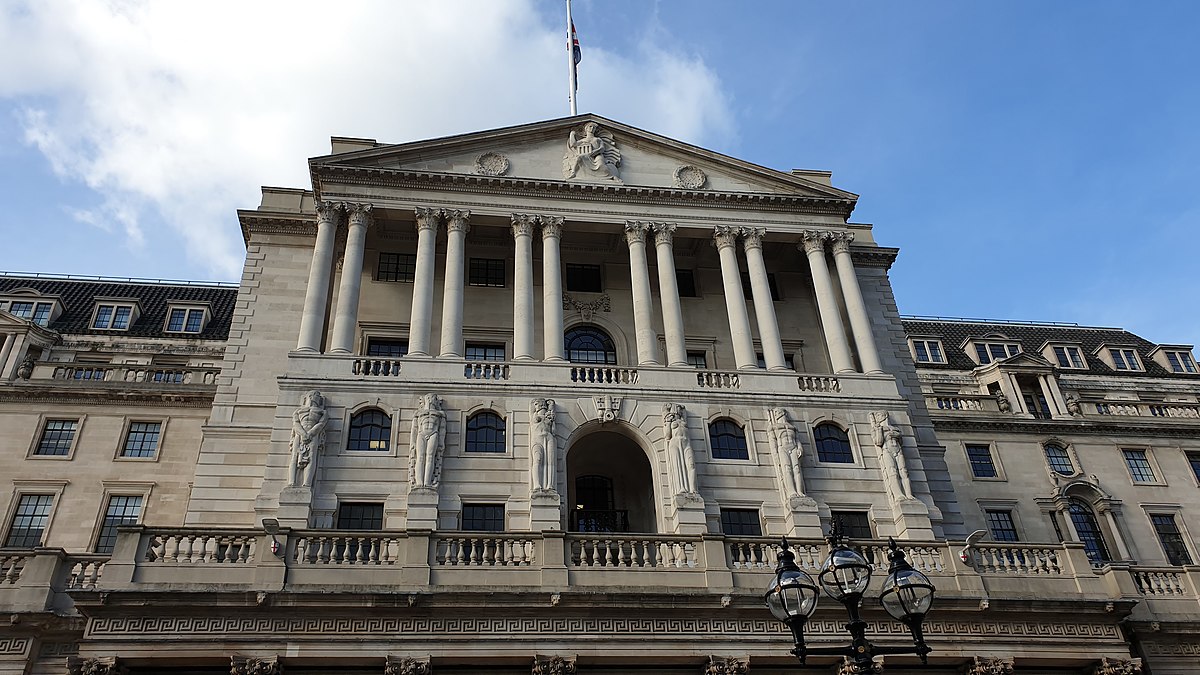
Illustrations: Bank of England facade.

Wendy M. Grossman is an award-winning journalist. Her Web site has an extensive archive of her books, articles, and music, and an archive of earlier columns in this series. She is a contributing editor for the Plutopia News Network podcast. Follow on Mastodon or Bluesky.

The safe place

For a long time, fear that technical decisions – new domain names ($), cooption of open standards or software, laws mandating data localization – would splinter the Internet. “Balkanize” was heard a lot.

A panel at the UK Internet Governance Forum a couple of weeks ago focused on this exact topic, and was mostly self-congratulatory. Which is when it occurred to me that the Internet may not *be* fragmented, but it *feels* fragmented. Almost every day I encounter some site I can’t reach: email goes into someone’s spam folder, the site or its content is off-limits because it’s been geofenced to conform with copyright or data protection laws, or the site mysteriously doesn’t load, with no explanation. The most likely explanation for the latter is censorship built into the Internet feed by the ISP or the establishment whose connection I’m using, but they don’t actually *say* that.

The ongoing attrition at Twitter is exacerbating this feeling, as the users I’ve followed for years continue to migrate elsewhere. At the moment, it takes accounts on several other services to keep track of everyone: definite fragmentation.

Here in the UK, this sense of fragmentation may be about to get a lot worse, as the long-heralded Online Safety bill – written and expanded until it’s become a “Frankenstein bill”, as Mark Scott and Annabelle Dickson report at Politico – hurtles toward passage. This week saw fruitless debates on amendments in the House of Lords, and it will presumably be back in the Commons shortly thereafter, where it could be passed into law by this fall.

A number of companies have warned that the bill, particularly if it passes with its provisions undermining end-to-end encryption intact, will drive them out of the country. I’m not sure British politicians are taking them seriously; so often such threats are idle. But in this case, I think they’re real, not least because post-Brexit Britain carries so much less global and commercial weight, a reality some politicians are in denial about. WhatsApp, Signal, and Apple have all said openly that they will not compromise the privacy of their masses of users elsewhere to suit the UK. Wikipedia has warned that including it in the requirement to age-verify its users will force it to withdraw rather than violate its principles about collecting as little information about users as possible. The irony is that the UK government itself runs on WhatsApp.

Wikipedia, Ian McRae, the director of market intelligence for prospective online safety regulator Ofcom, showed in a presentation at UKIGF, would be just one of the estimated 150,000 sites within the scope of the bill. Ofcom is ramping up to deal with the workload, an effort the agency expects to cost £169 million between now and 2025.

In a legal opinion commissioned by the Open Rights Group, barristers at Matrix Chambers find that clause 9(2) of the bill is unlawful. This, as Thomas Macaulay explains at The Next Web, is the clause that requires platforms to proactively remove illegal or “harmful” user-generated content. In fact: prior restraint. As ORG goes on to say, there is no requirement to tell users why their content has been blocked.

Until now, the impact of most badly-formulated British legislative proposals has been sort of abstract. Data retention, for example: you know that pervasive mass surveillance is a bad thing, but most of us don’t really expect to feel the impact personally. This is different. Some of my non-UK friends will only use Signal to communicate, and I doubt a day goes by that I don’t look something up on Wikipedia. I could use a VPN for that, but if the only way to use Signal is to have a non-UK phone? I can feel those losses already.

And if people think they dislike those ubiquitous cookie banners and consent clickthroughs, wait until they have to age-verify all over the place. Worst case: this bill will be an act of self-harm that one day will be as inexplicable to future generations as Brexit.

The UK is not the only one pursuing this path. Age verification in particular is catching on. The US states of Virginia, Mississippi, Louisiana, Arkansas, Texas, Montana, and Utah have all passed legislation requiring it; Pornhub now blocks users in Mississippi and Virginia. The likelihood is that many more countries will try to copy some or all of its provisions, just as Australia’s law requiring the big social media platforms to negotiate with news publishers is spawning copies in Canada and California.

This is where the real threat of the “splinternet” lies. Think of requiring 150,000 websites to implement age verification and proactively police content. Many of those sites, as the law firm Mischon de Reya writes may not even be based in the UK.

This means that any site located outside the UK – and perhaps even some that are based here – will be asking, “Is it worth it?” For a lot of them, it won’t be. Which means that however much the Internet retains its integrity, the British user experience will be the Internet as a sea of holes.

Illustrations: Drunk parrot in a Putney garden (by Simon Bisson; used by permission).

Wendy M. Grossman is the 2013 winner of the Enigma Award. Her Web site has an extensive archive of her books, articles, and music, and an archive of earlier columns in this series. Follow on Mastodon.

Breaking badly

This week, the Online Safety Bill reached the House of Lords, which will consider 300 amendments. There are lots of problems with this bill, but the one that continues to have the most campaigning focus is the age-old threat to require access to end-to-end encrypted messaging services.

At his blog, security consultant Alec Muffett predicts the bill will fail in implementation if it passes. For one thing, he cites the argument made by Richard Allan, Baron of Hallam that the UK government wants the power to order decryption but will likely only ever use it as a threat to force the technology companies to provide other useful data. Meanwhile, the technology companies have pushed back with an open letter saying they will withdraw their encrypted products from the UK market rather than weaken them.

In addition, Muffett believes the legally required secrecy when a service provider is issued with a Technical Capability Notice to provide access to communications, which was devised for the legacy telecommunications world, is impossible in today’s world of computers and smartphones. Secrecy is no longer possible, given the many researchers and hackers who make it their job to study changes to apps, and who would surely notice and publicize new decryption capabilities. The government will be left with the choice of alienating the public or failing to deliver its stated objectives.

At Computer Weekly, Bill Goodwin points out that undermining encryption will affect anyone communicating with anyone in Britain, including the Ukrainian military communicating with the UK’s Ministry of Defence.

Meanwhile, this week Ed Caesar reports at The New Yorker on law enforcement’s successful efforts to penetrate communications networks protected by Encrochat and Sky ECC. It’s a reminder that there are other choices besides opening up an entire nation’s communications to attack.

***

This week also saw the disappointing damp-squib settlement of the lawsuit brought by Dominion Voting Systems against Fox News. Disappointing, because it leaves Fox and its hosts free to go on wreaking daily havoc across America by selling their audience rage-enhanced lies without even an apology. The payment that Fox has agreed to – $787 million – sounds like a lot, but a) the company can afford it given the size of its cash pile, and b) most of it will likely be covered by insurance.

If Fox’s major source of revenues were advertising, these defamation cases – still to come is a similar case brought by Smartmatic – might make their mark by alienating advertisers, as has been happening with Twitter. But it’s not; instead, Fox is supported by the fees cable companies pay to carry the channel. Even subscribers who never watch it are paying monthly for Fox News to go on fomenting discord and spreading disinformation. And Fox is seeking a raise to $3 per subscriber, which would mean more than $1,8 billion a year just from affiliate revenue.

All of that insulates the company from boycotts, alienated advertisers, and even the next tranche of lawsuits. The only feedback loop in play is ratings – and Fox News remains the most-watched basic cable network.

This system could not be more broken.

***

Meanwhile, an era is ending: Netflix will mail out its last rental DVD in September. As Chris Stokel-Walker writes at Wired, the result will be to shrink the range of content available by tens of thousands of titles because the streaming library is a fraction of the size of the rental library.

This reality seems backwards. Surely streaming services ought to have the most complete libraries. But licensing and lockups mean that Netflix can only host for streaming what content owners decree it may, whereas with the mail rental service once Netflix had paid the commercial rental rate to buy the DVD it could stay in the catalogue until the disk wore out.

The upshot is yet another data point that makes pirate services more attractive: no ads, easy access to the widest range of content, and no licensing deals to get in the way.

***

In all the professions people have been suggesting are threatened by large language model-based text generation – journalism, in particular – no one to date has listed fraudulent spiritualist mediums. And yet…

The family of Michael Schumacher is preparing legal action against the German weekly Die Aktuelle for publishing an interview with the seven-time Formula 1 champion. Schumacher has been out of the public eye since suffering a brain injury while skiing in 2013. The “interview” is wholly fictitious, the quotes created by prompting an “AI” chat bot.

Given my history as a skeptic, my instinctive reaction was to flash on articles in which mediums produced supposed quotes from dead people, all of which tended to be anodyne representations bereft of personality. Dressing this up in the trappings of “AI” makes such fakery no less reprehensible.

An article in the Washington Post examines Google’s C4 data set scraped from 15 million websites and used to train several of the highest profile large language models. The Post has provided a search engine, which tells us that my own pelicancrossing.net, which was first set up in 1996, has contributed 160,000 words or phrases (“tokens”), or 0.0001% of the total. The obvious implication is that LLM-generated fake interviews with famous people can draw on things they’ve actually said in the past, mixing falsity and truth into a wasteland that will be difficult to parse.

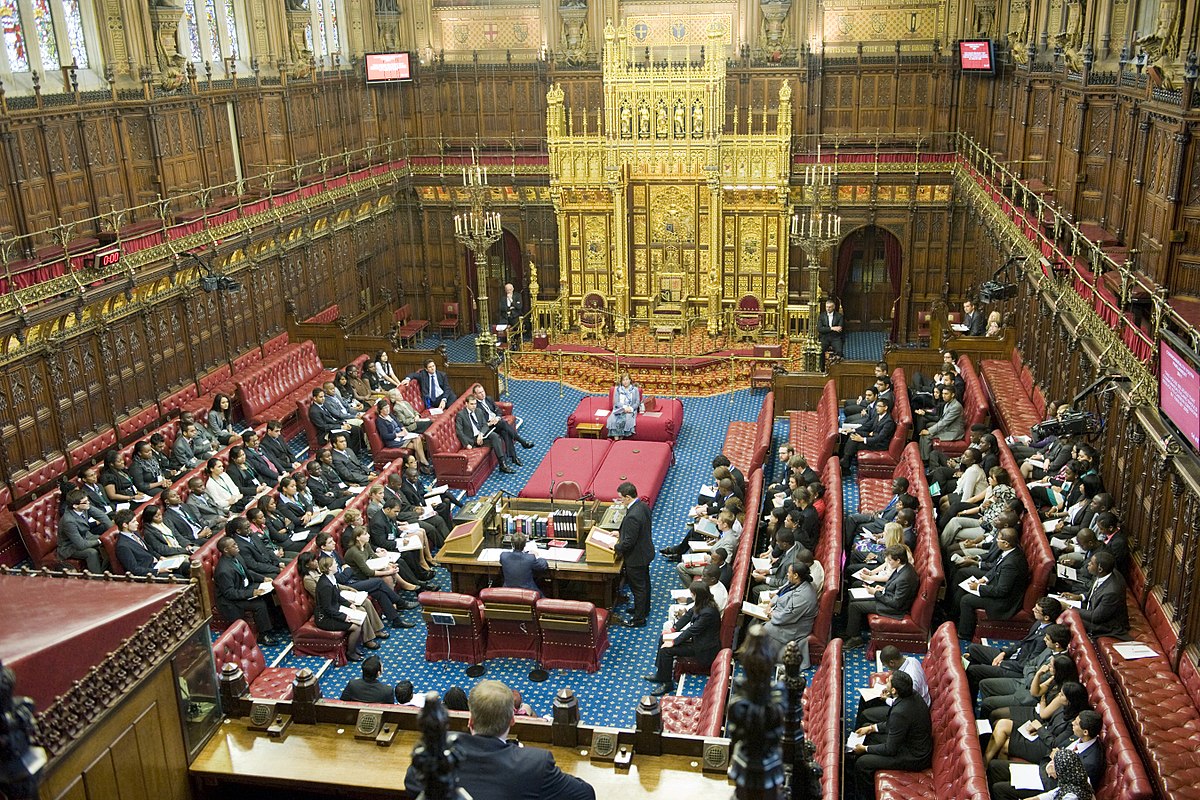
Illustrations: The House of Lords in 2011 (via Wikimedia).

Wendy M. Grossman is the 2013 winner of the Enigma Award. Her Web site has an extensive archive of her books, articles, and music, and an archive of earlier columns in this series. Follow on Twitter.