Unsafe

The riskiest system is the one you *think* you can trust. Say it in encryption: the least secure encryption is encryption that has unknown flaws. Because, in the belief that your communication or data is protected, you feel it’s safe to indulge in what in other contexts would be obviously risky behavior. Think of it like an unseen hole in a condom.

This has always been the most dangerous aspect of the UK government’s insistence that its technical capability notices remain secret. Whoever alerted the Washington Post to the notice Apple received a month ago commanding it to weaken its Advanced Data Protection performed an important public service. Now, Carly Page reports at TechCrunch based on a blog posting by security expert Alec Muffett, the UK government is recognizing that principle by quietly removing from its web pages advice to use that same encryption that was directed at people whose communications are at high risk – such as barristers and other legal professionals. Apple has since withdrawn ADP in the UK.

More important long-term, at the Financial Times, Tim Bradshaw and Lucy Fisher report that Apple has appealed the government’s order to the Investigatory Powers Tribunal. This will be, as the FT notes, the first time government powers under the Investigatory Powers Act (2016) to compel the weakening of security features will be tested in court. A ruling that the order was unlawful could be an important milestone in the seemingly interminable fight over encryption.

***

I’ve long had the habit of doing minor corrections on Wikipedia – fixing typos, improving syntax – as I find them in the ordinary course of research. But recently I have had occasion to create a couple of new pages, with the gratefully-received assistance of a highly experienced Wikipedian. At one time, I’m sure this was a matter of typing a little text, garlanding it with a few bits of code, and garnishing it with the odd reference, but standards have been rising all along, and now if you want your newly-created page to stay up it needs a cited reference for every statement of fact and a minimum of one per sentence. My modest pages had ten to 20 references, some servicing multiple items. Embedding the page matters, too, so you need to link mentions to all those pages. Even then, some review editor may come along and delete the page if they think the subject is not notable enough or violates someone’s copyright. You can appeal, of course…and fix whatever they’ve said the problem is.

It should be easier!

All of this detailed work is done by volunteers, who discuss the decisions they make in full view on the talk page associated with every content page. Studying the more detailed talk pages is a great way to understand how the encyclopedia, and knowledge in general, is curated.

Granted, Wikipedia is not perfect. Its policy on primary sources can be frustrating, and errors in cited secondary sources can be difficult to correct. The culture can be hostile if you misstep. Its coverage is uneven, But, as Margaret Talbot reports at the New Yorker and Amy Bruckman writes in her 2022 book, Should You Believe Wikipedia?, all those issues are fully documented.

Early on, Wikipedia was often the butt of complaints from people angry that this free encyclopedia made by *amateurs* threatened the sustainability of Encyclopaedia Britannica (which has survived though much changed). Today, it’s under attack by Elon Musk and the Heritage Foundation, as Lila Shroff writes at The Atlantic. The biggest danger isn’t to Wikipedia’s funding; there’s no offer anyone can make that would lead to a sale. The bigger vulnerability is the safety of individual editors. Scold they may, but as a collective they do important work to ensure that facts continue to matter.

***

Firefox users are manifesting more and more unhappiness about the direction Mozilla is taking with Firefox. The open source browser’s historic importance is outsized compared to its worldwide market share, which as of February 2025 is 2.63%, according to Statcounter. A long tail of other browsers are based on it, such as LibreWolf, Waterfox, and the privacy-protecting Tor.

The latest complaint, as Liam Proven and Thomas Claburn write at The Register is that Mozilla has removed its commitment not to sell user data from Firefox’s terms and conditions and privacy policy. Mozilla responded that the company doesn’t sell user data “in the way that most people think about ‘selling data'” but needed to change the language because of jurisdictional variations in what the word “sell” means. Still, the promise is gone.

This follows Mozilla’s September 2024 decision, reported by Richard Speed at The Register, to turn on by default a “privacy-preserving feature” to track users that led the NGO noyb to file a complaint with the Austrian data protection authority. And a month ago, Mark Hachman reported at PC World that Mozilla is building access to third-party generative AI chatbots into Firefox, and there are reports that it’s adding “AI-powered tab grouping.

All of these are basically unwelcome, and of all organizations Mozilla should have been able to foresee that. Go away, AI.

***

Molly White is expertly covering the Trump administration’s proposed “US Crypto Reserve”. Remains only to add Rachel Maddow, who compared it to having a strategic reserve of Beanie Babies.

Illustrations:: Beanie baby pelican.

Wendy M. Grossman is the 2013 winner of the Enigma Award. Her Web site has an extensive archive of her books, articles, and music, and an archive of earlier columns in this series. She is a contributing editor for the Plutopia News Network podcast. Follow on Mastodon or Bluesky.

Cognitive dissonance

The annual State of the Net, in Washington, DC, always attracts politically diverse viewpoints. This year was especially divided.

Three elements stood out: the divergence between the only remaining member of the Privacy and Civil Liberties Oversight Board (PCLOB) and a recently-fired colleague; a contentious panel on content moderation; and the yay, American innovation! approach to regulation.

As noted previously, on January 29 the days-old Trump administration fired PCLOB members Travis LeBlanc, Ed Felten, and chair Sharon Bradford Franklin; the remaining seat was already empty.

Not to worry, remaining member Beth Williams, said. “We are open for business. Our work conducting important independent oversight of the intelligence community has not ended just because we’re currently sub-quorum.” Flying solo she can greenlight publication, direct work, and review new procedures and policies; she can’t start new projects. A review is ongoing of the EU-US Privacy Framework under Executive Order 14086 (2022). Williams seemed more interested in restricting government censorship and abuse of financial data in the name of combating domestic terrorism.

Soon afterwards, LeBlanc, whose firing has him considering “legal options”, told Brian Fung that the outcome of next year’s reauthorization of Section 702, which covers foreign surveillance programs, keeps him awake at night. Earlier, Williams noted that she and Richard E. DeZinno, who left in 2023, wrote a “minority report” recommending “major” structural change within the FBI to prevent weaponization of S702.

LeBlanc is also concerned that agencies at the border are coordinating with the FBI to surveil US persons as well as migrants. More broadly, he said, gutting the PCLOB costs it independence, expertise, trustworthiness, and credibility and limits public options for redress. He thinks the EU-US data privacy framework could indeed be at risk.

A friend called the panel on content moderation “surreal” in its divisions. Yael Eisenstat and Joel Thayer tried valiantly to disentangle questions of accountability and transparency from free speech. To little avail: Jacob Mchangama and Ari Cohn kept tangling them back up again.

This largely reflects Congressional debates. As in the UK, there is bipartisan concern about child safety – see also the proposed Kids Online Safety Act – but Republicans also separately push hard on “free speech”, claiming that conservative voices are being disproportionately silenced. Meanwhile, organizations that study online speech patterns and could perhaps establish whether that’s true are being attacked and silenced.

Eisenstat tried to draw boundaries between speech and companies’ actions. She can still find on Facebook the sme Telegram ads containing illegal child sexual abuse material that she found when Telegram CEO Pavel Durov was arrested. Despite violating the terms and conditions, they bring Meta profits. “How is that a free speech debate as opposed to a company responsibility debate?”

Thayer seconded her: “What speech interests do these companies have other than to collect data and keep you on their platforms?”

By contrast, Mchangama complained that overblocking – that is, restricting legal speech – is seen across EU countries. “The better solution is to empower users.” Cohn also disliked the UK and European push to hold platforms responsible for fulfilling their own terms and conditions. “When you get to whether platforms are living up to their content moderation standards, that puts the government and courts in the position of having to second-guess platforms’ editorial decisions.”

But Cohn was talking legal content; Eisenstat was talking illegal activity: “We’re talking about distribution mechanisms.” In the end, she said, “We are a democracy, and part of that is having the right to understand how companies affect our health and lives.” Instead, these debates persist because we lack factual knowledge of what goes on inside. If we can’t figure out accountability for these platforms, “This will be the only industry above the law while becoming the richest companies in the world.”

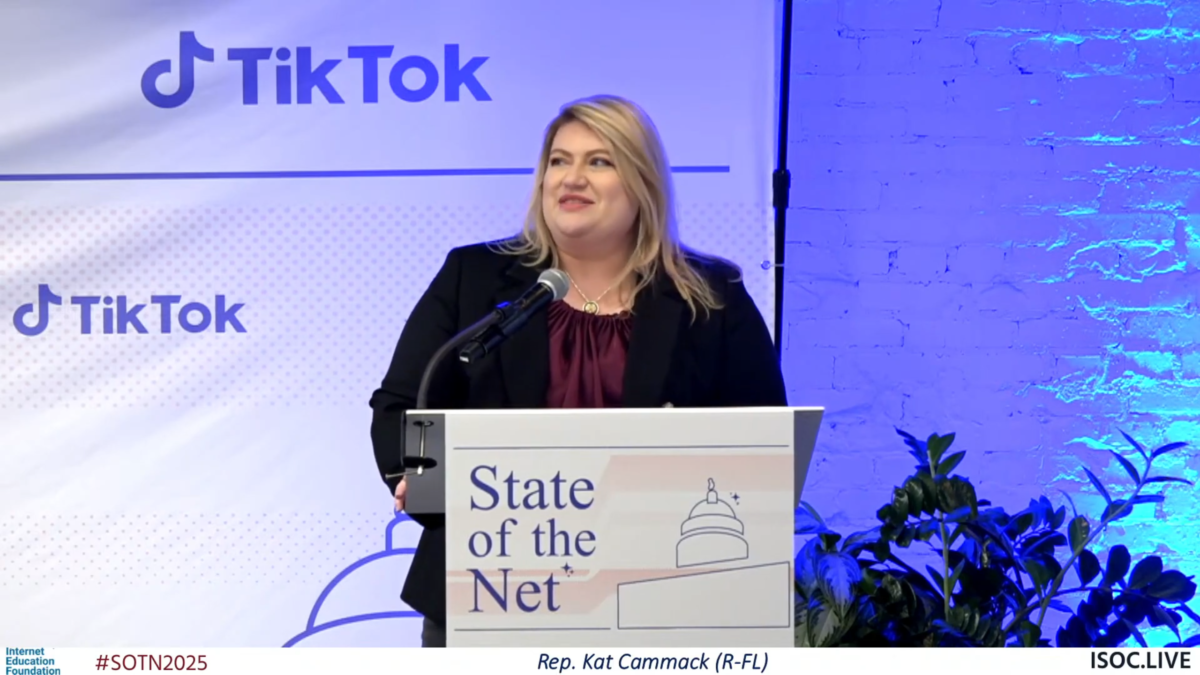
Twenty-five years after data protection became a fundamental right in Europe, the DC crowd still seem to see it as a regulation in search of a deal. Representative Kat Cammack (R-FL), who described herself as the “designated IT person” on the energy and commerce committee, was particularly excited that policy surrounding emerging technologies could be industry-driven, because “Congress is *old*!” and DC is designed to move slowly. “There will always be concerns about data and privacy, but we can navigate that. We can’t deter innovation and expect to flourish.”

Others also expressed enthusiasm for “the great opportunities in front of our country”, compared the EU’s Digital Markets Act to a toll plaza congesting I-95. Samir Jain, on the AI governance panel, suggested the EU may be “reconsidering its approach”. US senator Marsha Blackburn (R-TN) highlighted China’s threat to US cybersecurity without noting the US’s own goal, CALEA.

On that same AI panel, Olivia Zhu, the Assistant Director for AI Policy for the White House Office of Science and Technology Policy, seemed more realistic: “Companies operate globally, and have to do so under the EU AI Act. The reality is they are racing to comply with [it]. Disengaging from that risks a cacophony of regulations worldwide.”

Shortly before, Johnny Ryan, a Senior Fellow at the Irish Council for Civil Liberties posted: “EU Commission has dumped the AI Liability Directive. Presumably for “innovation”. But China, which has the toughest AI law in the world, is out innovating everyone.”

Illustrations: Kat Cammack (R-FL) at State of the Net 2025.

Wendy M. Grossman is the 2013 winner of the Enigma Award. Her Web site has an extensive archive of her books, articles, and music, and an archive of earlier columns in this series. She is a contributing editor for the Plutopia News Network podcast. Follow on Mastodon or Bluesky.
Isolate

Yesterday, the Global Encryption Coalition published a joint letter calling on the UK to rescind its demand that Apple undermine (“backdoor”) the end-to-end encryption on its services. The Internet Society is taking signatures until February 20.

The background: on February 7, Joseph Menn reported at the Washington Post (followed by Dominic Preston at The Verge) that in January the office of the Home Secretary sent Apple a technical capability notice under the Investigatory Powers Act (2018) ordering it to provide access to content that anyone anywhere in the world has uploaded to iCloud and encrypted with Apple’s Advanced Data Protection.

Technical capability notices are supposed to be secret. It’s a criminal offense to reveal that you’ve been sent one. Apple can’t even tell users that their data may be compromised. (This kind of thing is why people publish warrant canaries.) Menn notes that even if Apple withdraws ADP in the UK, British authorities will still demand access to encrypted data everywhere *else*. So it appears that if the Home Office doesn’t back down and Apple is unwilling to cripple its encryption, the company will either have to withdraw ADP across the world or exit the UK market entirely. At his Odds and Ends of History blog, James O’Malley calls the Uk’s demand stupid, counter-productive, and unworkable. At TechRadar, Chiara Castro asks who’s next, and quotes Big Brother Watch director Silkie Carlo: “unprecedented for a government in any democracy”.

When the UK first began demanding extraterritorial jurisdiction for its interception rules, most people wondered how the country thought it would be able to impose it. That was 11 years ago; it was one of the new powers codified in the Data Retention and Investigatory Powers Act (2014) and kept in its replacement, the IPA in 2016.

Governments haven’t changed – they’ve been trying to undermine strong encryption in the hands of the masses since 1991, when Phil Zinmmermann launched PGP – but the technology has, as Graham Smith recounted at Ars Technica in 2017. Smartphones are everywhere. People store their whole lives on them for everything and giant technology companies encrypt both the device itself and the cloud backups. Government demands have changed to reflect that, from focusing on the individual with key escrow and key lengths to focusing on the technology provider with client-side scanning, encrypted messaging (see also the EU) and now cloud storage.

At one time, a government could install a secret wiretap by making a deal with a legacy telco. The Internet’s proliferation of communications providers changed that for a while. During the resulting panic the US passed the Communications Assistance for Law Enforcement Act (1994), which requires Internet service providers and telecommunications companies to install wiretap-ready equipment – originally for telephone calls, later broadband and VOIP traffic as well.

This is where the UK government’s refusal to learn from others’ mistakes is staggering. Just four months ago, the US discovered Salt Typhoon, a giant Chinese hack into its core telecommunications networks that was specifically facilitated by…by…CALEA. To repeat: there is no such thing as a magic hole that only “good guys” can use. If you undermine everyone’s privacy and security to facilitate law enforcement, you will get an insecure world where everyone is vulnerable. The hack has led US authorities to promote encrypted messaging.

Joseph Cox’s recent book, Dark Wire touches on this. It’s a worked example of what law enforcement internationally can do if given open access to all messages criminals send across a network when they think they are operating in complete safety. Yes, the results were impressive: hundreds of arrests, dozens of tons of drugs seized, masses if firearms impounded. But, Cox writes, all that success was merely a rounding error in global drug trade. Universal loss of privacy and security versus a rounding error: it’s the definition of “disproportionate”.

It remains to be seen what Apple decides to do and whether we can trust what the company tells us. At his blog, Alec Muffett is collecting ongoing coverage of events. The Future of Privacy Forum celebrated Safer Internet Day, February 11, with an infographic showing how encryption protects children and teens.

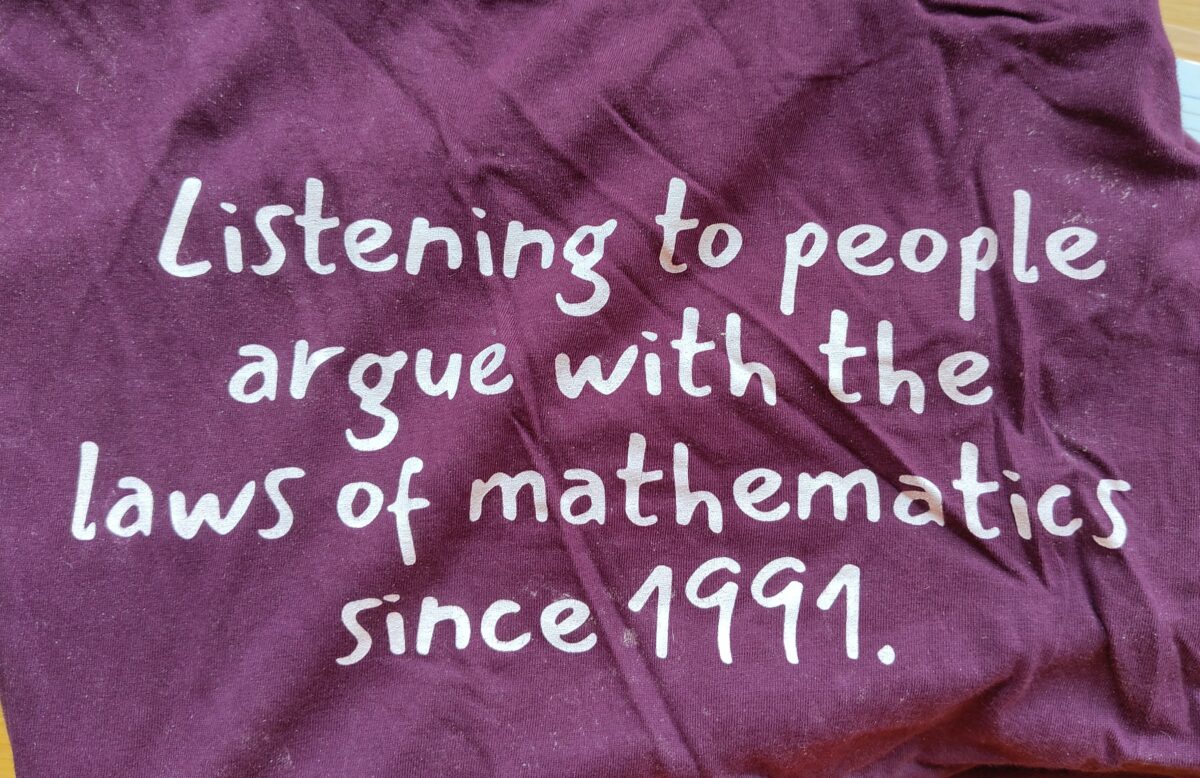
But set aside for a moment all the usual arguments about encryption, which really haven’t changed in over 30 years because mathematical reality hasn’t.

In the wider context, Britain risks making itself a technological backwater. First, there’s the backdoored encryption demand, which threatens every encrypted service. Second, there’s the impact of the onrushing Online Safety Act, which comes into force in March. Ofcom, the regulator charged with enforcing it, is issuing thousands of pages of guidance that make it plain that only large platforms will have the resources to comply. Small sites, whether businesses, volunteer-run Fediverse instances, blogs, established communities, or web boards, will struggle even if Ofcom starts to do a better job of helping them understand their legal obligations. Many will likely either shut down or exit the UK, leaving the British Internet poorer and more isolated as a result. Ofcom seems to see this as success.

It’s not hard to predict the outcome if these laws converge in the worst possible timeline: a second Brexit, this one online.

Illustrations: T-shirt (gift from Jen Persson).

Wendy M. Grossman is the 2013 winner of the Enigma Award. Her Web site has an extensive archive of her books, articles, and music, and an archive of earlier columns in this series. She is a contributing editor for the Plutopia News Network podcast. Follow on Mastodon or Bluesky.
What we talk about when we talk about computers

The climax of Nathan Englander‘s very funny play What We Talk About When We Talk About Anne Frank sees the four main characters play a game – the “Anne Frank game” – that two of them invented as children. The play is on at the Marylebone Theatre until February 15.

The plot: two estranged former best friends in a New York yeshiva have arranged a reunion for themselves and their husbands. Debbie (Caroline Catz), has let her religious attachment lapse in the secular environs of Miami, Florida, where her husband, Phil (Joshua Malina), is an attorney. Their college-age son, Trevor (Gabriel Howell), calls the action.

They host Hasidic Shosh (Dorothea Myer-Bennett) and Yuri (Simon Yadoo), formerly Lauren and Mark, whose lives in Israel and traditional black dress and, in Shosh’s case, hair-covering wig, have left them unprepared for the bare arms and legs of Floridians. Having spent her adult life in a cramped apartment with Yuri and their eight daughters, Shosh is astonished at the size of Debbie’s house.

They talk. They share life stories. They eat. And they fight: what is the right way to be Jewish? Trevor asks: given climate change, does it matter?

So, the Anne Frank game: who among your friends would hide you when the Nazis are coming? The rule that you must tell the truth reveals the characters’ moral and emotional cores.

I couldn’t avoid up-ending this question. There are people I trust and who I *think* would hide me, but it would often be better not to ask them. Some have exceptionally vulnerable families who can’t afford additional risk. Some I’m not sure could stand up to intensive questioning. Most have no functional hiding place. My own home offers nowhere that a searcher for stray humans wouldn’t think to look, and no opportunities to create one. With the best will in the world, I couldn’t make anyone safe, though possibly I could make them temporarily safer.

But practical considerations are not the game. The game is to think about whether you would risk your life for someone else, and why or why not. It’s a thought experiment. Debbie calls it “a game of ultimate truth”.

However, the game is also a cheat, in that the characters have full information about all parts of the story. We know the Nazis coming for the Frank family are unquestionably bent on evil, because we know the Franks’ fates when they were eventually found. It may be hard to tell the truth to your fellow players, but the game is easy to think about because it’s replete with moral clarity.

Things are fuzzier in real life, even for comparatively tiny decisions. In 2012, the late film critic Roger Ebert mulled what he would do if he were a Transport Security Administration agent suddenly required to give intimate patdowns to airline passengers unwilling to go through the scanner. Ebert considered the conflict between moral and personal distaste and TSA officers’ need to keep their reasonably well-paid jobs with health insurance benefits. He concluded that he hoped he’d quit rather than do the patdowns. Today, such qualms are ancient history; both scanners and patdowns have become normalized.

Moral and practical clarity is exactly what’s missing as the Department of Government Efficiency arrives in US government departments and agencies to demand access to their computer systems. Their motives and plans are unclear, as is their authority for the access they’re demanding. The outcome is unknown.

So, instead of a vulnerable 13-year-old girl and her family, what if the thing under threat is a computer? Not the sentient emotional robot/AI of techie fantasy but an ordinary computer system holding boring old databases. Or putting through boring old payments. Or underpinning the boring old air traffic control system. Do you see a computer or the millions of people whose lives depend on it? How much will you risk to protect it? What are you protecting it from? Hinder, help, quit?

Meanwhile, DOGE is demanding that staff allow its young coders to attach unauthorized servers, take control of websites. In addition: mass firings, and a plan to do some sort of inside-government AI startup.

DOGE itself appears to be thinking ahead; it’s told staff to avoid Slack while awaiting a technology that won’t be subject to FOIA requests.

The more you know about computers the scarier this all is. Computer systems of the complexity and accuracy of those the US government has built over decades are not easily understood by incoming non-experts who have apparently been visited by the Knowledge Fairy. After so much time and effort on security and protecting against shadowy hackers, the biggest attack – as Mike Masnick calls it – on government systems is coming from inside the house in full view.

Even if “all” DOGE has is read-only access as Treasury claims – though Wired and Talking Points Memo have evidence otherwise – those systems hold comprehensive sensitive information on most of the US population. Being able to read – and copy? – is plenty bad enough. In both fiction (Margaret Atwood’s The Handmaid’s Tale) and fact (IBM), computers have been used to select populations to victimize. Americans are about to find out they trusted their government more than they thought.

Illustration: Changing a tube in the early computer ENIAC (via Wikimedia).

Wendy M. Grossman is the 2013 winner of the Enigma Award. Her Web site has an extensive archive of her books, articles, and music, and an archive of earlier columns in this series. Stories about the border wars between cyberspace and real life are posted occasionally during the week at the net.wars Pinboard – or follow on Twitter.

The Gulf of Google

In 1945, the then mayor of New York City, Fiorello La Guardia signed a bill renaming Sixth Avenue. Eighty years later, even with street signs that include the new name, the vast majority of New Yorkers still say things like, “I’ll meet you at the southwest corner of 51st and Sixth”. You can lead a horse to Avenue of the Americas, but you can’t make him say it.

US president Donald Trump’s order renaming the Gulf of Mexico offers a rarely discussed way to splinter the Internet (at the application layer, anyway; geography matters!), and on Tuesday Google announced it would change the name for US users of its Maps app. As many have noted, this contravenes Google’s 2008 policy on naming bodies of water in Google Earth: “primary local usage”. A day later, reports came that Google has placed the US on its short list of sensitive countries – that is, ones whose rulers dispute the names and ownership of various territories: China, Russia, Israel, Saudi Arabia, Iraq.

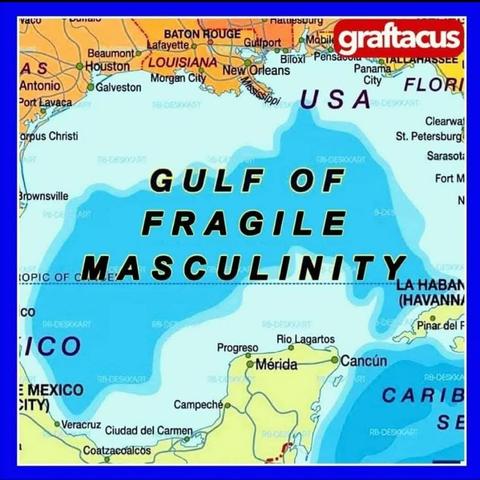
Sharpieing a new name on a map is less brutal than invading, but it’s a game anyone can play. Seen on Mastodon: the bay, now labeled “Gulf of Fragile Masculinity”.

***

Ed Zitron has been expecting the generative AI bubble to collapse disastrously. Last week provided an “Is this it?” moment when the Chinese company DeepSeek released reasoning models that outperform the best of the west at a fraction of the cost and computing power. US stock market investors: “Let’s panic!”

The code, though not the training data, is open source, as is the relevant research. In Zitron’s analysis, the biggest loser here is OpenAI, though it didn’t seem like that to investors in other companies, especially Nvidia, whose share price dropped 17% on Tuesday alone. In an entertaining sideshow, OpenAI complains that DeepSeek stole its code – ironic given the history.

On Monday, Jon Stewart quipped that Chinese AI had taken American AI’s job. From there the countdown started until someone invoked national security.

Nvidia’s chips have been the picks and shovels of generative AI, just as they were for cryptocurrency mining. In the latter case, Nvidia’s fortunes waned when cryptocurrency prices crashed, ethercoin, among others, switched to proof of stake, and miners shifted to more efficient, lower-cost application-specific integrated circuits. All of these lowered computational needs. So it’s easy to believe the pattern is repeating with generative AI.

There are several ironies here. The first is that the potential for small language models to outshine large ones has been known since at least 2020, when Timnit Gebru, Emily Bender, Margaret Mitchell, and Angelina McMillan-Major published their stochastic parrots paper. Google soon fired Gebru, who told Bloomberg this week that AI development is being driven by FOMO rather than interesting questions. Second, as an AI researcher friend points out, Hugging Face, which is trying to replicate DeepSeek’s model from scratch, said the same thing two years ago. Imagine if someone had listened.

***

A work commitment forced me to slog through Ross Douthat’s lengthy interview with Marc Andreessen at the New York Times. Tl;dr: Andreessen says Silicon Valley turned right because Democrats broke The Deal under which Silicon Valley supported liberal democracy and the Democrats didn’t regulate them. In his whiny victimhood, Andreessen has no recognition that changes in Silicon Valley’s behavior – and the scale at which it operates – are *why* Democrats’ attitudes changed. If Silicon Valley wants its Deal back, it should stop doing things that are obviously exploitive. Random case in point: Hannah Ziegler reports at the Washington Post that a $1,700 bassinet called a “Snoo” suddenly started demanding $20 per month to keep rocking a baby all night. I mean, for that kind of money I pretty much expect the bassinet to make its own breast milk.

***

Almost exactly eight years ago, Donald Trump celebrated his installation in the US presidency by issuing an executive order that risked up-ending the legal basis for data flows between the EU, which has strict data protection laws, and the US, which doesn’t. This week, he did it again.

In 2017, Executive Order 13768 dominated Computers, Privacy, and Data Protection. The deal in place at the time, Privacy Shield, eventually survived until 2020, when it was struck down in lawyer Max Schrems’s second such case. It was replaced by the Transatlantic Data Privacy Framework, which established the five-member Privacy and Civil Liberties Oversight Board to oversee surveillance and, as Politico explains, handle complaints from Europeans about misuse of their data.

This week, Trump rendered the board non-operational by firing its three Democrats, leaving just one Republican-member in place.*

At Techdirt, Mike Masnick warns the framework could collapse, costing Facebook, Instagram, WhatsApp, YouTube, exTwitter, and other US-based services (including Truth Social) their European customers. At his NGO, noyb, Schrems himself takes note: “This deal was always built on sand.”

Schrems adds that another Trump Executive Order gives 45 days to review and possibly scrap predecessor Joe Biden’s national security decisions, including some the framework also relies on. Few things ought to scare US – and, in a slew of new complaints, Chinese – businesses more than knowing Schrems is watching.

Illustrations: The Gulf of Mexico (NASA, via Wikimedia).

*Corrected to reflect that the three departing board members are described as Democrats, not Democrat-appointed. In fact, two of them, Ed Felten and Travis LeBlanc, were appointed by Trump in his original term.

Wendy M. Grossman is the 2013 winner of the Enigma Award. Her Web site has an extensive archive of her books, articles, and music, and an archive of earlier columns in this series. She is a contributing editor for the Plutopia News Network podcast. Follow on Mastodon or Bluesky.

Government identification as a service

This week, the clock started ticking on the UK’s Online Safety Act. Ofcom, the regulator charged with enforcing it, published its codes of practice and guidance, which come into force on March 17, 2025. At that point, websites that fall into scope – in Ofcom’s 2023 estimate 150,000 of them – must comply with requirements to conduct risk assessments, preemptively block child sexual abuse material, register a responsible person (who faces legal and financial liability), and much more.

Almost immediately, the first casualty made itself known: Dee Kitchen announced the closure of her site, which supports hundreds of interest-based forums. Ofcom’s risk assessment guidance (PDF), the personal liability would be overwhelming even if the forums produced enough in donations to cover the costs of compliance.

Russ Garrett has a summary for small sites. UK-linked blogs – even those with barely any readers – could certainly fit the definition per Ofcom’s checker tool, if users can comment on each other’s posts. Common sense says that’s ridiculous in many cases…but as Kitchen says all takes to ruin the blogger’s life is a malicious complainant wielding the OSA as their weapon.

Kitchen will certainly not be alone in concluding the requirements are prohibitively risky for web forums and bulletin boards that are run by volunteers and have minimal funding. Yet they are the Internet’s healthy social ecology, without the algorithms and business models that do most to create the harms the Act is meant to address. Promising Trouble and Power to Change are collaborating on a community of practice, and have asked Ofcom for a briefing on compliance for volunteers and small sites.

Garrett’s summary also points out that Ofcom’s rules leave it wide open for sites to censor *more* than is required, and many will do exactly that to minimize their risk. A side effect, as Garrett writes, will be to further centralize the Net, as moving communities to larger providers such as Discord will shift the liability onto *them*. This is what happens when rules controlling speech are written from the single lens of preventing harm rather than starting from a base of human rights.

More guidance to come from Ofcom next month. We haven’t even started on implementing age verification yet.

***

On Monday, I learned a new term I wish I hadn’t: “government identity as a service”. GIAAS?

The speaker was human rights campaigner Edward Hasbrouck, in a talk on identification Dave Farber‘s and Dan Gillmor‘s weekly CCRC/IP-Asia Zoom call.

Most people trace the accelerating rise of demands for identification in countries like the US and UK to 9/11. Based on that, there are now people old enough to drink in a US state who are not aware it was ever possible to just walk up to fly, get a hotel room, or enter an office. As Hasbrouck writes in a US election day posting, the rise in government demands for ID has been powered by the simultaneous rise of corporate tracking for commercial purposes. He calls it a “malign convergence of interest”.

It has long been obvious that anything companies collect can be subpoenaed by governments. Hasbrouck’s point, however, is that identification enables control as well as surveillance; it brings watchlists, blocklists, and automated bars to freedom of action – it makes us decision subjects as Gavin Freeguard said at the recent Foundation for Information Policy Research event.

Hasbrouck pinpoints three components that each present a vulnerability to control: identification, logging, decision making. As an example, consider the UK’s in-progress eVisa system, in which the government confirms an individual’s visa status online in real time with no option for physical documentation. This gives the government enormous power to stop individuals from doing vital but mundane things like rent a home, board an aircraft, or get a job. Its heart is identification – and a law delegating border enforcement to myriad civil intermediaries and normalizes these checks.

Many in the UK were outraged by proposals to give the Department of Work and Pensions the power to examine people’s bank accounts. In the US, Hasbrouck points to a recent report from the House Judiciary Committee on the Weaponization of the Federal Government that documents the Treasury Department’s Financial Crimes Enforcement Network’s collaboration with the FBI to push banks to submit reports of suspicious activity while it trawled for possible suspects after the January 6 insurrection. Yes, the destructors should be caught and punished; but also any weapon turned against people we don’t like can also be turned against us. Did anyone vote to let the FBI conduct financial surveillance by the million?

Now imagine that companies outsource ID checks to the government and offload the risk of running their own. That is how the no-fly list works. That’s how airlines operate *now*. GIAAS.

Then add the passive identification that systems like facial recognition are spreading. You can no longer reliably know whether you have been identified and logged, who gets that information, or what hidden decision they may make based on it. Few of us are sure of our rights in any situation, and few of us even ask why. In his slides (PDF), Hasbrouck offers a list of ways to fight back. He has hope.

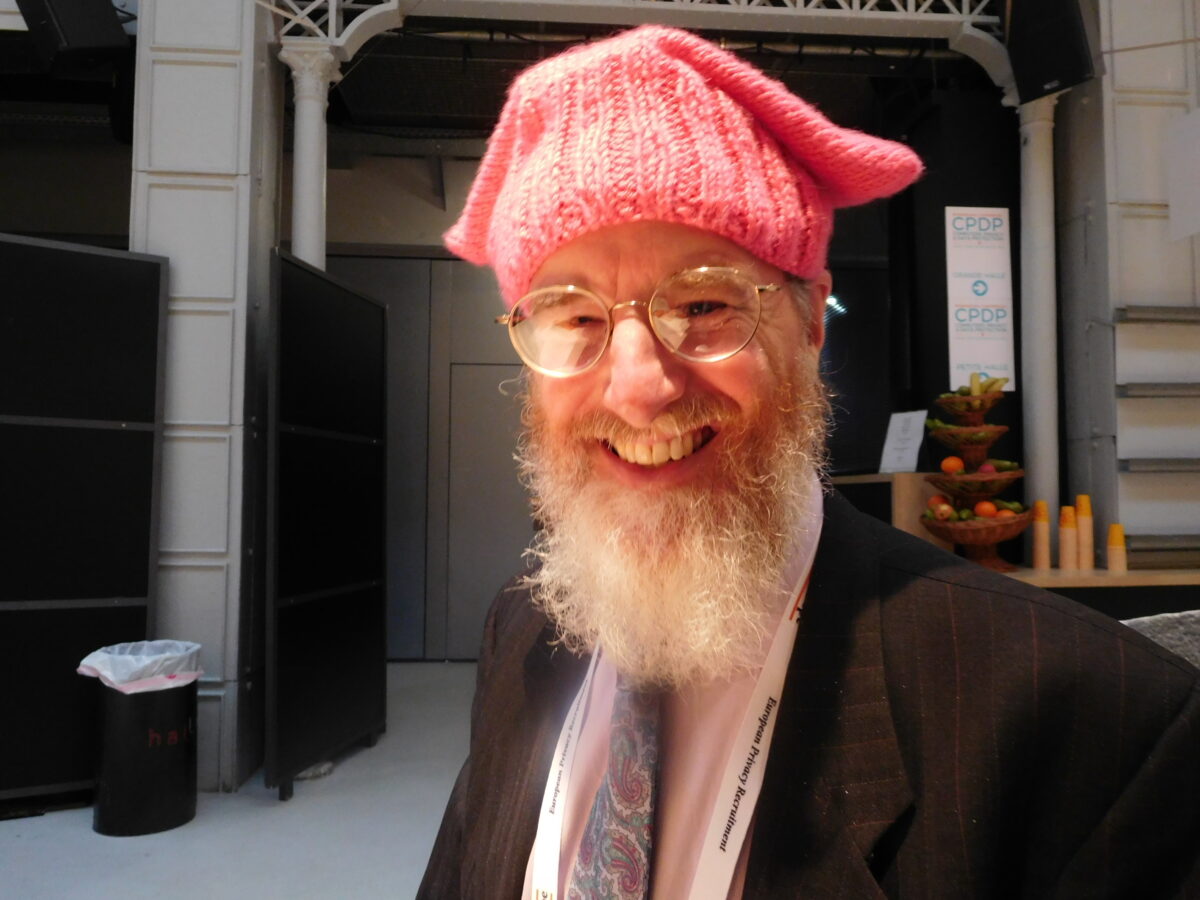
Illustrations: Edward Hasbrouck at CPDP in 2017.

Wendy M. Grossman is the 2013 winner of the Enigma Award. Her Web site has an extensive archive of her books, articles, and music, and an archive of earlier columns in this series. She is a contributing editor for the Plutopia News Network podcast. Follow on Mastodon or Bluesky.

Loose ends

Privacy technologies typically fail for one of two reasons: 1) they’re too complicated and/or expensive to find widespread adoption among users; 2) sites and services ignore, undermine, or bypass them in order to preserve their business model. In the first category are numerous privacy-enhancing technologies that failed to make their case in the marketplace. Among examples of the first category are numerous encryption-related attempts to secure communications. Repeated failures in the marketplace, usually because the resulting products were too technically difficult for most users, they never found mass adoption. In the end, encrypted messaging didn’t really took off until WhatsApp built it into its service.

This week saw a category two failure: Mozilla announced it is removing the Do Not Track option from Firefox’s privacy settings. DNT is simple enough to implement if you can stand to check and change settings, but it falls on the wrong side of modern business models and, other than in California, the US has no supporting legislation to make it enforceable. Granted, Firefox is a minority browser now, but the moment feels significant for this 13-year-old technology.

As Kevin Purdy explains at Ars Technica, DNT began as an FTC proposal, based on work by Christopher Soghoian and Sid Stamm, that aimed to create a mechanism for the web similar to the “Do Not Call” list for telephone networks.

The world in which DNT seemed a hopeful possibility seems almost quaint now: then, one could still imagine that websites might voluntarily respect the signal web browsers sent indicating users’ preferences. Do Not Call, by contrast, was established by US federal legislation. Despite various efforts, the US failed to pass legislation underpinning DNT, and it never became a web standard. The closest it has come to the latter is Section 2.12 of the W3C’s Ethical Web Principles, which says, “People must be able to change web pages according to their needs.” Can I say I *need* to not be tracked?

Even at the time it seemed doubtful that web companies would comply. But it also suffered from unfortunate timing. DNT arrived just as the twin onslaught of smartphones and social media was changing the ethos that built the open web. Since then, as Cory Doctor wrote earlier this year, the incentives have aligned to push web browsers to become faithless user agents, and conventions mean less and less.

Ultimately, DNT only ever worked insofar as users could trust websites to honor their preference. As it’s become clear they can’t, ad blockers have proliferated, depriving sites of ad revenue they need to survive. Had DNT been successful, perhaps we’d have all been better off.

***

Also on the way out this week is Cruise’s San Francisco robotaxis. My last visit to San Francisco, about a year ago, was the first time I saw these in person. Most of the ones I saw were empty Waymos, perhaps in transit to a passenger, perhaps just pointlessly clogging the streets. Around then, a Cruise robotaxi ran over a pedestrian who’d been hit by another car and then dragged her 20 feet. San Francisco promptly suspended Cruise’s license. Technology critic Paris Marx thought the incident would likely be Cruise’s “death knell”. And so it’s proving. The announcement from GM, which acquired Cruise in 2016 for $1 billion, leaves just Waymo standing in the US self-driving taxi business, with Tesla saying it will enter the market late next year.

I always associate robotaxis with Vernor Vinge‘s 2006 novel Rainbows End. In it, Vinge imagined a future in which robotaxis arrived within minutes of being hailed and replaced both public transport and private car ownership. By 2012 or so, his fictional imagining had become real-life projection, and many were predicting that our streets would imminently be filled with self-driving cars, taxis or not. In 2017, the conversation was all about what ethics to program into them and reclaiming urban space. Now, that imagined future seems to be receding, as skeptics predicted it would.

***

American journalism has long operated under the presumption that the stories it produces should be “neutral”. Now, at the LA Times, CEO Patrick Soon-Shiong thinks he can enforce this neutrality by running an AI-based “bias meter” over the paper’s stories. If you remember, in the late stages of the US presidential election, Soon-Shiong blocked the paper from endorsing Kamala Harris. Reports say that the bias meter, due out next month, is meant to identify any bias the story’s source has and then deliver “both sides” of that story.

This is absurd. Few news stories have just two competing sides. A biased source can’t be countered by rewriting the story unless you include more sources and points of view, which means additional research. Most important, AI can’t think.

But readers can. And so what this story says is that Soon-Shiung doesn’t trust either the journalists who work for him or the paper’s readers to draw the conclusions he wants. If he knew more about journalism, he’d know that readers generally don’t adopt opinions just because someone tells them to. The far greater power, I recall reading years ago, lies in determining what readers *think about* by deciding what topics are important enough to cover. There’s bias there, too, but Soon-Shiong’s meter won’t show it.

Illustrations: Dominic Wilccox‘s concept driverless sleeper car, 2014.

Wendy M. Grossman is the 2013 winner of the Enigma Award. Her Web site has an extensive archive of her books, articles, and music, and an archive of earlier columns in this series. She is a contributing editor for the Plutopia News Network podcast. Follow on Mastodon or Bluesky.
Return of the Four Horsemen

The themes at this week’s Scrambling for Safety, hosted by the Foundation for Information Policy Research, are topical but not new since the original 1997 event: chat control; the online safety act; and AI in government decision making.

The EU proposal chat control would require platforms served with a detection order to scan people’s phones for both new and previously known child sexual abuse materialclient-side scanning. Robin Wilton prefers to call this “preemptive monitoring” to clarify that it’s an attack.

Yet it’s not fit even for its stated purpose, as Claudia Peersman showed, based on research conducted at REPHRAIN. They set out to develop a human-centric evaluation framework for the AI tools needed at the scale chat control would require. Their main conclusion: AI tools are not ready to be deployed on end-to-end-encrypted private communications. This was also Ross Anderson‘s argument in his 2022 paper on chat control (PDF) showing why it won’t meet the stated goals. Peersman also noted an important oversight: none of the stakeholder groups consulted in developing these tools include the children they’re supposed to protect.

This led Jen Persson to ask: “What are we doing to young people?” Children may not understand encryption, she said, but they do know what privacy means to them, as numerous researchers have found. If violating children’s right to privacy by dismantling encryption means ignoring the UN Convention on the Rights of the Child, “What world are we leaving for them? How do we deal with a lack of privacy in trusted relationships?”

All this led Wilton to comment that if the technology doesn’t work, that’s hard evidence that it is neither “necessary” nor “proportionate”, as human rights law demands. Yet, Persson pointed out, legislators keep passing laws that technologists insist are unworkable. Studies in both France and Australia have found that there is no viable privacy-preserving age verification technology – but the UK’s Online Safety Act (2023) still requires it.

In both examples – and in introducing AI into government decision making – a key element is false positives, which swamp human adjudicators in any large-scale automated system. In outlining the practicality of the Online Safety Act, Graham Smith cited the recent case of Marieha Hussein, who carried a placard at a pro-Palestinian protest that depicted former prime minister Rishi Sunak and former home secretary Suella Braverman as coconuts. After two days of evidence, the judge concluded the placard was (allowed) political satire rather than (criminal) racial abuse. What automated system can understand that the same image means different things in different contexts? What human moderator has two days? Platforms will simply remove content that would never have led to a conviction in court.

Or, asked Monica Horten suggested, how does a platform identify the new offense of coercive control?

Lisa Sugiura, who campaigns to end violence against women and girls, had already noted that the same apps parents install so they can monitor their children (and are reluctant to give up later) are openly advertised with slogans like “Use this to check up on your cheating wife”. (See also Cindy Southworth, 2010, on stalker apps.) The dots connect into reports Persson heard at last week’s Safer Internet Forum that young women find it hard to refuse when potential partners want parental-style monitoring rights and then find it even harder to extricate themselves from abusive situations.

Design teams don’t count the cost of this sort of collateral damage, just as their companies have little liability for the human cost of false positives, and the narrow lens of child safety also ignores these wider costs. Yet they can be staggering: the 1990s US law requiring ISPs to facilitate wiretapping, CALEA, created the vulnerability that enabled widescale Chinese spying in 2024.

Wilton called laws that essentially treat all of us as suspects “a rule to make good people behave well, instead of preventing bad people from behaving badly”. Big organized crime cases like the Silk Road, Encrochat, and Sky ECC, relied on infiltration, not breaking encryption. Once upon a time, veterans know, there were four horsemen always cited by proponents of such laws: organized crime, drug dealers, terorrists, and child abusers. We hear little about the first three these days.

All of this will take new forms as the new government adopts AI in decision making with the same old hopes: increased efficiency, lowered costs. Government is not learning from the previous waves of technoutopianism, which brought us things like the Post Office Horizon scandal, said Gavin Freeguard. Under data protection law we were “data subjects”; now we are becoming “decision subjects” whose voices are not being heard.

There is some hope: Swee Leng Harris sees improvements in the reissued data bill, though she stresses that it’s important to remind people that the “cloud” is really material data centers that consume energy (and use water) at staggering rates (see also Kate Crawford’s book, Atlas of AI). It’s no help that UK ministers and civil servants move on to other jobs at pace, ensuring there is no accountability. As Sam Smith said, computers have made it possible to do things faster – but also to go wrong faster at a much larger scale.

Illustrations: Time magazine’s 1995 “Cyberporn” cover, the first children and online pornography scare, based on a fraudulent study.

Wendy M. Grossman is the 2013 winner of the Enigma Award. Her Web site has an extensive archive of her books, articles, and music, and an archive of earlier columns in this series. She is a contributing editor for the Plutopia News Network podcast. Follow on Mastodon.

Blown

“This is a public place. Everyone has the right to be left in peace,” Jane (Vanessa Redgrave) tells Thomas (David Hemmings), whom she’s just spotted photographing her with her lover in the 1966 film Blow-Up, by Michelangelo Antonioni. The movie, set in London, proceeds as a mystery in which Thomas’s only tangible evidence is a grainy, blown-up shot of a blob that may be a murdered body.

Today, Thomas would probably be wielding a latest-model smartphone instead of a single lens reflex film camera. He would not bother to hide behind a tree. And Jane would probably never notice, much less challenge Thomas to explain his clearly-not-illegal, though creepy, behavior. Phones and cameras are everywhere. If you want to meet a lover and be sure no one’s photographing you, you don’t go to a public park, even one as empty as the film finds Maryon Park. Today’s 20-somethings grew up with that reality, and learned early to agree some gatherings are no-photography zones.

Even in the 1960s individuals had cameras, but taking high-quality images at a distance was the province of a small minority of experts; Antonioni’s photographer was a professional with his own darkroom and enlarging equipment. The first CCTV cameras went up in the 1960s; their proliferation became public policy issue in the 1980s, and was propagandized as “for your safety without much thought in the post-9/11 2000s. In the late 2010s, CCTV surveillance became democratized: my neighbor’s Ring camera means no one can leave an anonymous gift on their doorstep – or (without my consent) mine.

I suspect one reason we became largely complacent about ubiquitous cameras is that the images mostly remained unidentifiable, or at least unidentified. Facial recognition – especially the live variant police seem to feel they have the right to set up at will – is changing all that. Which all leads to this week, when Joseph Cox at 404 Media reports ($) (and Ars Technica summarizes) that two Harvard students have mashed up a pair of unremarkable $300 Meta Ray-Bans with the reverse image search service Pimeyes and a large language model to produce I-XRAY, an app that identifies in near-real time most of the people they pass on the street, including their name, home address, and phone number.

The students – AnhPhu Nguyen and Caine Ardayfio – are smart enough to realize the implications, imagining for Cox the scenario of a random male spotting a young woman and following her home. This news is breaking the same week that the San Francisco Standard and others are reporting that two men in San Francisco stood in front of a driverless Waymo taxi to block it from proceeding while demanding that the female passenger inside give them her phone number (we used to give such males the local phone number for time and temperature).

Nguyen and Ardayfio aren’t releasing the code they’ve written, but what two people can do, others with fewer ethics can recreate independently, as 30 years of Black Hat and Def Con have proved. This is a new level of democratizated surveillance. Today, giant databases like Clearview AI are largely only accessible to governments and law enforcement. But the data in them has been scraped from the web, like LLMs’ training data, and merged with commercial sources

This latest prospective threat to privacy has been created by the marriage of three technologies that were developed separately by different actors without regard to one another and, more important, without imagining how one might magnify the privacy risks of the others. A connected car with cameras could also run I-XRAY.

The San Francisco story is a good argument against allowing cars on the roads without steering wheels, pedals, and other controls or *something* to allow a passenger to take charge to protect their own safety. In Manhattan cars waiting at certain traffic lights often used to be approached by people who would wash the windshield and demand payment. Experienced drivers knew to hang back at red lights so they could roll forward past the oncoming would-be washer. How would you do this in a driverless car with no controls?

We’ve long known that people will prank autonomous cars. Coverage focused on the safety of the *cars* and the people and vehicles surrounding them, not the passengers. Calling a remote technical support line for help is never going to get a good enough response.

What ties these two cases together – besides (potentially) providing new ways to harass women – is the collision between new technologies and human nature. Plus, the merger of three decades’ worth of piled-up data and software that can make things happen in the physical world.

Arguably, we should have seen this coming, but the manufacturers of new technology have never been good at predicting what weird things their users will find to do with it. This mattered less when the worst outcome was using spreadsheet software to write letters. Today, that sort of imaginative failure is happening at scale in software that controls physical objects and penetrates the physical world. The risks are vastly greater and far more unsettling. It’s not that we can’t see the forest for the trees; it’s that we can’t see the potential for trees to aggregate into a forest.

Illustrations: Jane (Vanessa Redgrave) and her lover, being photographed by Thomas (David Hemmings) in Michelangelo Antonioni’s 1966 film, Blow-Up.

Wendy M. Grossman is the 2013 winner of the Enigma Award. Her Web site has an extensive archive of her books, articles, and music, and an archive of earlier columns in this series. She is a contributing editor for the Plutopia News Network podcast. Follow on Mastodon.

Boxed up

If the actions of the owners of streaming services are creating the perfect conditions for the return of piracy, it’s equally true that the adtech industry’s decisions continue to encourage installing ad blockers as a matter of self-defense. This is overall a bad thing, since most of us can’t afford to pay for everything we want to read online.

This week, Google abruptly aborted a change it’s been working on for four years: it will abandon its plan to replace third-party cookies with new technology it called Privacy Sandbox. From the sounds of it, Google will continue working on the Sandbox, but will continue to retain third-party cookies. The privacy consequences of this are…muddy.

To recap: there are two kinds of cookies, which are small files websites place on your computer, distinguished by their source and use. Sites use first-party cookies to give their pages the equivalent of memory. They’re how the site remembers which items you’ve put in your cart, or that you’ve logged in to your account. These are the “essential cookies” that some consent banners mention, and without them you couldn’t use the web interactively.

Third-party cookies are trackers. Once a company deposits one of these things on your computer, it can use it to follow along as you browse the web, collecting data about you and your habits the whole time. To capture the ickiness of this, Demos researcher Carl Miller has suggested renaming them slime trails. Third-party cookies are why the same ads seem to follow you around the web. They are also why people in the UK and Europe see so many cookie consent banners: the EU’s General Data Protection Regulation requires all websites to obtain informed consent before dropping them on our machines. Ad blockers help here. They won’t stop you from seeing the banners, but they can save you the time you’d have to spend adjusting settings on the many sites that make it hard to say no.

The big technology companies are well aware that people hate both ads and being tracked in order to serve ads. In 2020, Apple announced that its Safari web browser would block third-party cookies by default, continuing work it started in 2017. This was one of several privacy-protecting moves the company made; in 2021, it began requiring iPhone apps to offer users the opportunity to opt out of tracking for advertising purposes at installation. In 2022, Meta estimated Apple’s move would cost it $10 billion that year.

If the cookie seemed doomed at that point, it seemed even more so when Google announced it was working on new technology that would do away with third-party cookies in its dominant Chrome browser. Like Apple, however, Google proposed to give users greater control only over the privacy invasions of third parties without in any way disturbing Google’s own ability to track users. Privacy advocates quickly recognized this.

At Ars Technica, Ron Amadeo describes the Sandbox’s inner workings. Briefly, it derives a list of advertising topics from the websites users visits, and shares those with web pages when they ask. This is what you turn on when you say yes to Chrome’s “ad privacy feature”. Back when it was announced, EFF’s Bennett Cyphers was deeply unimpressed: instead of new tracking versus old tracking, he asked, why can’t we have *no* tracking? Just a few days ago, EFF followed up with the news that its Privacy Badger browser add-on now opts users out of the Privacy Sandbox (EFF has also published manual instructions.).

Google intended to make this shift in stages, beginning the process of turning off third-party cookies in January 2024 and finishing the job in the second half of 2024. Now, when the day of completion should be rapidly approaching, the company has said it’s over – that is, it no longer plans to turn off third-party cookies. As Thomas Claburn writes at The Register, implementing the new technology still requires a lot of work from a lot of companies besides Google. The technology will remain in the browser – and users will “get” to choose which kind of tracking they prefer; Kevin Purdy reports at Ars Technica that the company is calling this a “new experience”.

At The Drum, Kendra Barnett reports that the UK’s Information Commissioner’s Office is unhappy about Google’s decision. Even though it had also identified possible vulnerabilities in the Sandbox’s design, the ICO had welcomed the plan to block third-party cookies.

I’d love to believe that Google’s announcement might have been helped by the fact that Sandbox is already the subject of legal action. Last month the privacy-protecting NGO noyb complained to the Austrian data protection authority, arguing that Sandbox tracking still requires user consent. Real consent, not obfuscated “ad privacy feature” stuff, as Richard Speed explains at The Register. But far more likely it’s money, At the Press Gazette, Jim Edwards reports that Sandbox could cost publishers 60% of their revenue “from programmatically sold ads”. Note, however, that the figure is courtesy of adtech company Criteo, likely a loser under Sandbox.

The question is what comes next. As Cyphers said, we deserve real choices: *whether* we are tracked, not just who gets to do it. Our lives should not be the leverage big technology companies use to enhance their already dominant position.

Illustrations: A sandbox (via Wikimedia)

Wendy M. Grossman is the 2013 winner of the Enigma Award. Her Web site has an extensive archive of her books, articles, and music, and an archive of earlier columns in this series. She is a contributing editor for the Plutopia News Network podcast. Follow on Mastodon.