This week, a regional court in Munich issued what may be a landmark decision: it ruled that Google is liable for the content of its “AI Overviews”. The court was careful to distinguish between these, which Google’s algorithms generate, and search results, which link to content on third-party websites Google does not control. In other words, Google owns its own mistakes. The court awarded 80% of costs to the plaintiffs, two Munich-based publishers who claimed that the company spread damaging false information about them by linking them to scams in these AI-generated summaries.
As Max Bastian writes at Decoder, the ruling could set precedents for other companies. Google has yet to comment, but presumably will appeal. Away from AI is certainly not the direction the company wants to go; it’s spent the last couple of years building generative AI more and more deeply into its search, hoping to keep users locked in instead of chasing off to other sites. (Ironically, bouncing users off to other sites was the reason Yahoo refused to buy it in 1998, when the received business model was keeping users on your own site as long as possible.)
Google tried to argue that users should do their own fact-checking. But, as the court seems to have understood, where search results send you to the source page, AI Overviews look complete and don’t always offer sourcing to check. A study conducted for the New York Times found in an analysis of more than 4,000 searches that AI Overviews produced using the Gemini 2 model were accurate 85% of the time, rising to 91% when using Gemini 3 – about average for these systems. Enter the Law of Truly Large Numbers: 91% only sounds pretty good until you multiply the remaining 9% by billions to calculate the millions of wrong answers being disseminated every single day. Oumi, the startup that performed the analysis, found the AI Overviews included sources such as Facebook and Reddit posts, drew incorrect information even from authoritative sources, and are prone to manipulation. The article notes that Google disputes the analysis, saying that the benchmarks were developed by OpenAI and themselves contain inaccuracies.
The Munich court ordered Google to stop repeating the claims about the publishers, and awarded the publishers 80% of costs. It also rejected Google’s attempt to frame the issue as one of freedom of speech, calling the AI Overviews, “above all an expression of Google’s business activities”.
One reason the judge’s ruling is so significant is that most approaches for dealing with misinformation that have been mooted to date are at human, instead of computer, scale. Fact-checking, for example, while valuable, moves very, very slowly, one claim at a time. If the ruling stands, it will help tackle this type of misinformation at source.
Politicians like to talk as if the moon they want is available if the industry would just stop being obstructive. With AI’s capabilities in headlines everywhere, they are now demanding that phones should block children from taking, viewing, or sharing nude photos. This is the policy Keir Starmer announced this week in a speech, based on claims from the British company SafetoNet. The government has since provided more detail. Mic Wright has a round-up of press reactions. At the Daily Telegraph, Big Brother Watch director Silkie Carlo provides a strong civil liberties objection.
So far, neither Apple nor Google has said much. At New Scientist, Chris Stokel-Walker notes that both companies already have some controls in place, but spreading them through third-party apps poses challenges, especially as some phones’ operating systems aren’t recent enough to have the more sophisticated parental controls in the first place.
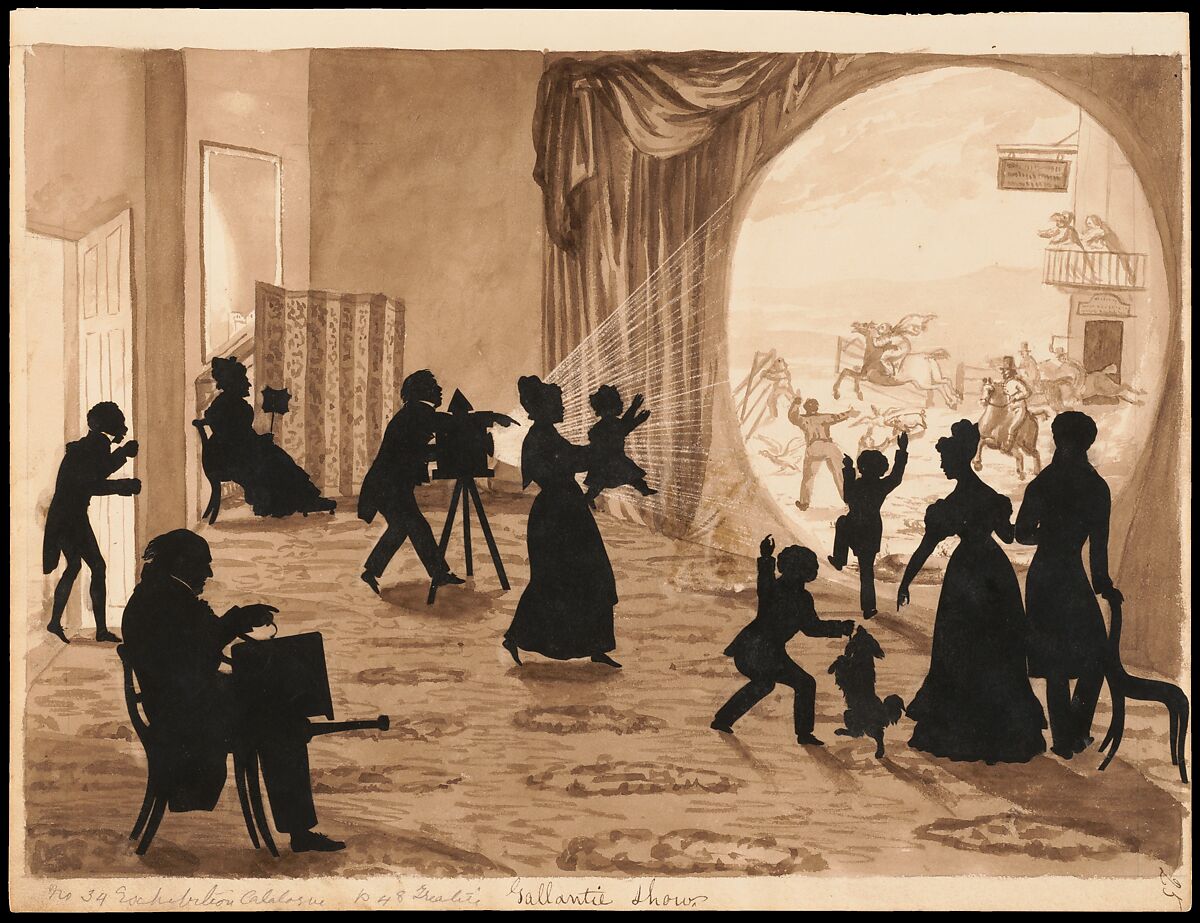
The moral may be: if you tell people your technology is magic, don’t be surprised when they expect it to *be* magic.
This week I had to verify my identity for Companies House. This is supposed to be a straightforward matter of creating a Gov One login, entering some details of a government-issued ID, and uploading a photo. The website was discontented: it couldn’t find my address, (is my century-old home too old to be in the database?), and didn’t accept the details I entered. Eventually, it offered two alternatives: use a phone app, or present myself in person at a preselected post office.
The app balked. It couldn’t open its links even though I’d authorized it. So, in this year of two thousand and twenty-six I got on a train to go to the nearest remaining post office that could perform the necessary rituals to show them first a QR code to access my application and then the ID, whose information is digitally held but had to be retyped on the post office tablet, and finally pose for a photo for the system – not the post office human – to compare and match. Some of those steps took several tries to mollify the system. Naturally, they don’t report whether you’ve passed until after you’ve gone home.
These are the people who want to create a digital ID infrastructure. I can only assume that if they ever get that system up and running actually using it will involve faxing things because by then all the post offices will be gone.
Illustrations: “The Magic Lantern”, by Auguste Edouart, circa 1835 (via The Met); at one time we thought that technology was magic.
Also this week:
At the Plutopia podcast, we talk to about her new book, Bad Influence.
The TechGrumps podcast episode, 3.41: The KardashElons of AI.
Wendy M. Grossman is an award-winning journalist. Her Web site has an extensive archive of her books, articles, and music, and an archive of earlier columns in this series. She is a contributing editor for the Plutopia News Network podcast. Follow on Mastodon or Bluesky.
