Last week, many media reported that in January 2025 a US citizen named Sam Tunick, arriving at the international airport in Atlanta, was stopped for questioning and told to hand over his phone. It appears that he gave the border agent a “duress password” – an unlocking code that wiped the phone when the agent typed it in. This feature is included in his phone’s operating system, GrapheneOS. Now he’s being charged with a felony.
At the Guardian, Timothy Pratt reports that without his knowledge, Tunick had been put on a terrorism watch list because of his alleged connections to protests against the giant, new, and controversial police training center known as Cop City. The government’s lawyers have apparently described this stop as, as Pratt has it, “an everyday interrogation at an international airport, ‘looking for anything that’s prohibited’.” Both that description and the event itself remind that rights are scarce at borders.
The government is prosecuting Tunick under a law criminalizing the knowing destruction of property to prevent seizure. This will be an interesting argument to follow: the *phone* was not destroyed. Most likely, neither was the data; there could easily be copies held elsewhere. Accessing those would require a warrant and reading Tunick his rights, steps the agents allegedly skipped in the airport.
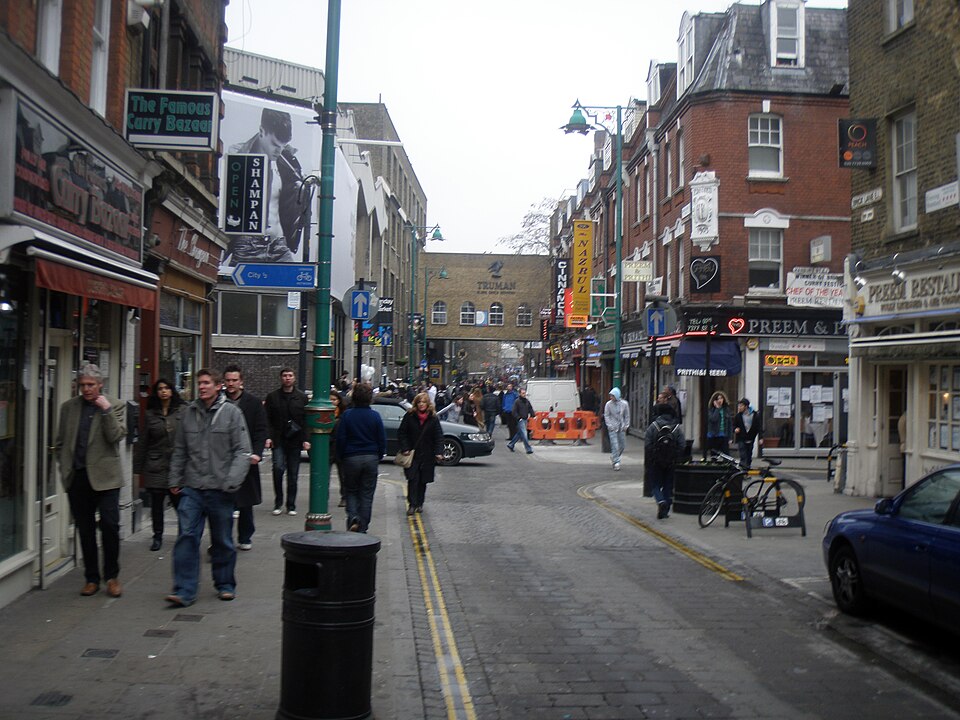
Someone tried to tell me recently that the opposition to data centers is coming from people who don’t understand them. On the contrary: the people opposing the conversion of Brick Lane’s historic Truman Brewery into a data center, for example, seem to understand perfectly well that tradeoffs are being made that pit their lives in their local community and their need for affordable housing against the demands of the nearby financial industry. The conversion was approved this week by Angela Rayner, the new secretary for housing.
Similarly, the people in Utah opposing a data center the size of two Manhattans seem quite clear about the impact on local water and power resources. The Virginia behemoth canceled a few weeks ago was said to be the size of 144 Walmart supercenters and comprise 37 data centers and 14 substations; opponents were exercised about the project’s estimated energy demands, water pollution, and location next to a historic Civil War battlefield.
Even in Texas, where data centers have been embraced with enthusiasm, the governor is calling a halt until their planned connections to the public electrical grid can be audited; the more than 1,800 projects in the queue represent more than five times the grid’s record for peak demand, according to AP News. Powering data centers is only a small part of the rise in electricity prices across the US, as Newsweek says, but looks increasingly significant (assuming all these projects are completed, which is another question). Protests are also spreading in the Middle East, as Rest of World reports.
This is the stuff today’s pub arguments are made of. Data center builders tend to wave away these concerns: they are becoming more energy-efficient, and shrinking their water use, shifting to cooling techniques such as immersion, closed-loop systems, and air. The industry body TechUK says that more than 51% of 73 sites surveyed use forms of waterless cooling and 64% use less than a typical leisure center.
However, the International Energy Agency finds that although data centers are indeed adopting less energy-intensive designs, their power use continues to rise exponentially as more people use AI systems and adopt newer, energy-hungrier technologies such as AI agents. Siting data centers in areas that are already water-stressed adds to that stress no matter how efficient they become. Plus, they remain noisy and unsocial neighbors, and once they’re up and running tend to provide few jobs.
The more serious argument is that the data centers answer people’s desire to use the services they underpin. This is clearly not the case with the Brick Lane data center, a rare case where the purpose a particular data center is being built to serve is known. Taxing the traders, as some would suggest as a remedy, doesn’t really solve that: the conversion still changes an iconic building into a guarded lifeless blob in the middle of a famously densely populated and active community. What are the opportunity costs?
The original questioner makes the assumption that if people understood the *benefits* data centers bring, opposition would melt away. I can sympathize: I recall a 1990s meet-your-MP session full of complaints about planned 3G mobile towers = even though everyone wanted to be able to use the phone in their pocket.
Data centers, however, seem more like Ogden Nash’s poem about billboards. Data centers are associated with some of the world’s most disliked companies and their owners; scary stories of technology going rogue, while the benefits seemingly accrue only to those who want to control and surveil. There’s no obvious reward for many of us from a bigger, more AI-driven Facebook, seeing the web subsumed under Google’s “AI overviews”, or the prospect of increasingly invasive, personalized pricing, and the far greater privacy invasions of as AI-powered surveillance spreads widely.
Disagree with protesters if you want, but they’re not ignorant.
Illustrations: The view down Brick Lane toward the Truman Brewery (via Gons at Wikimedia.

Wendy M. Grossman is an award-winning journalist. Her Web site has an extensive archive of her books, articles, and music, and an archive of earlier columns in this series. She is a contributing editor for the Plutopia News Network podcast. Follow on Mastodon or Bluesky.
